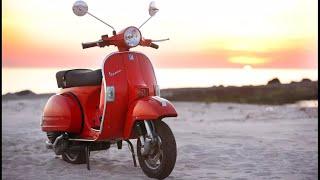
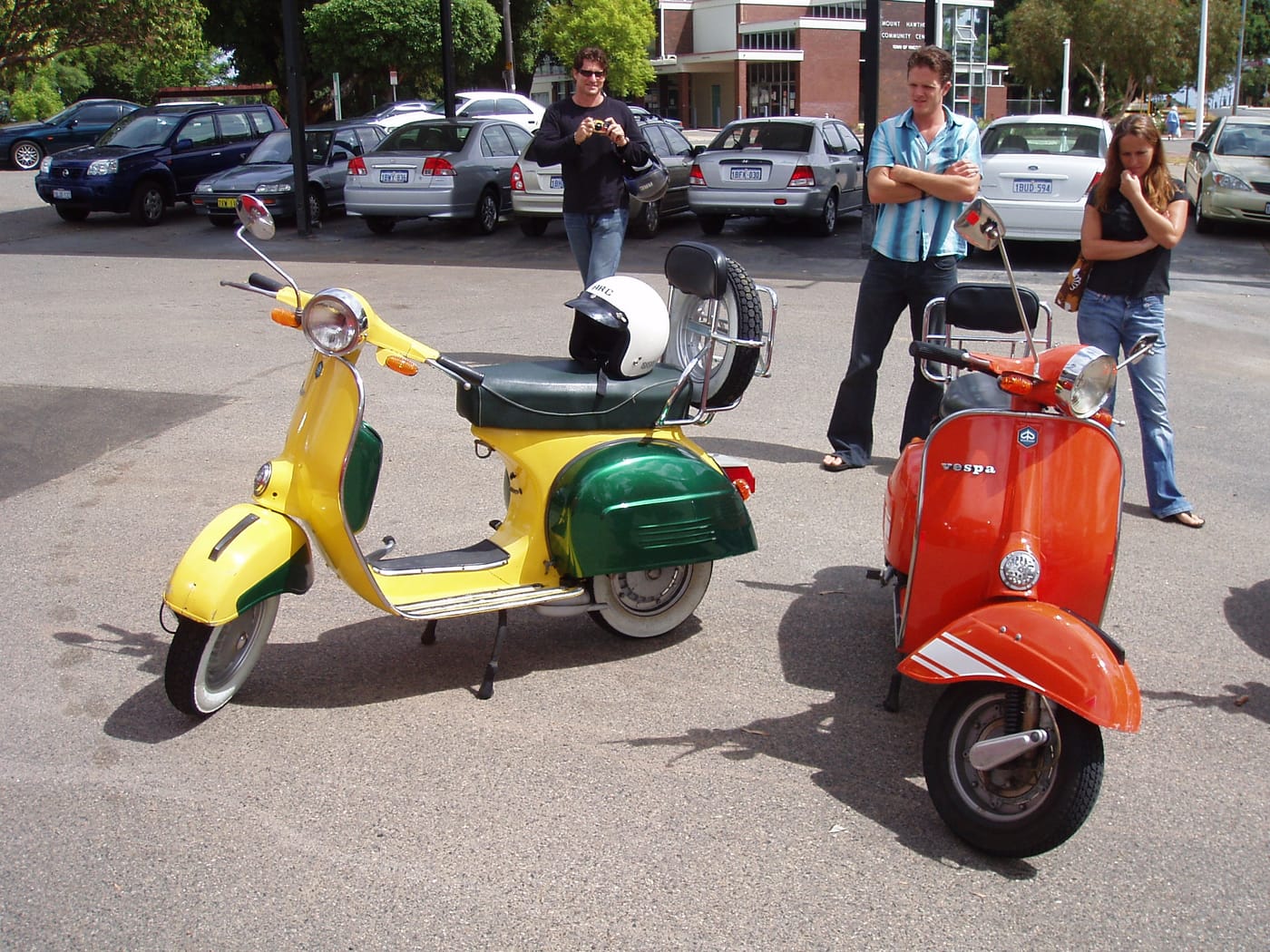
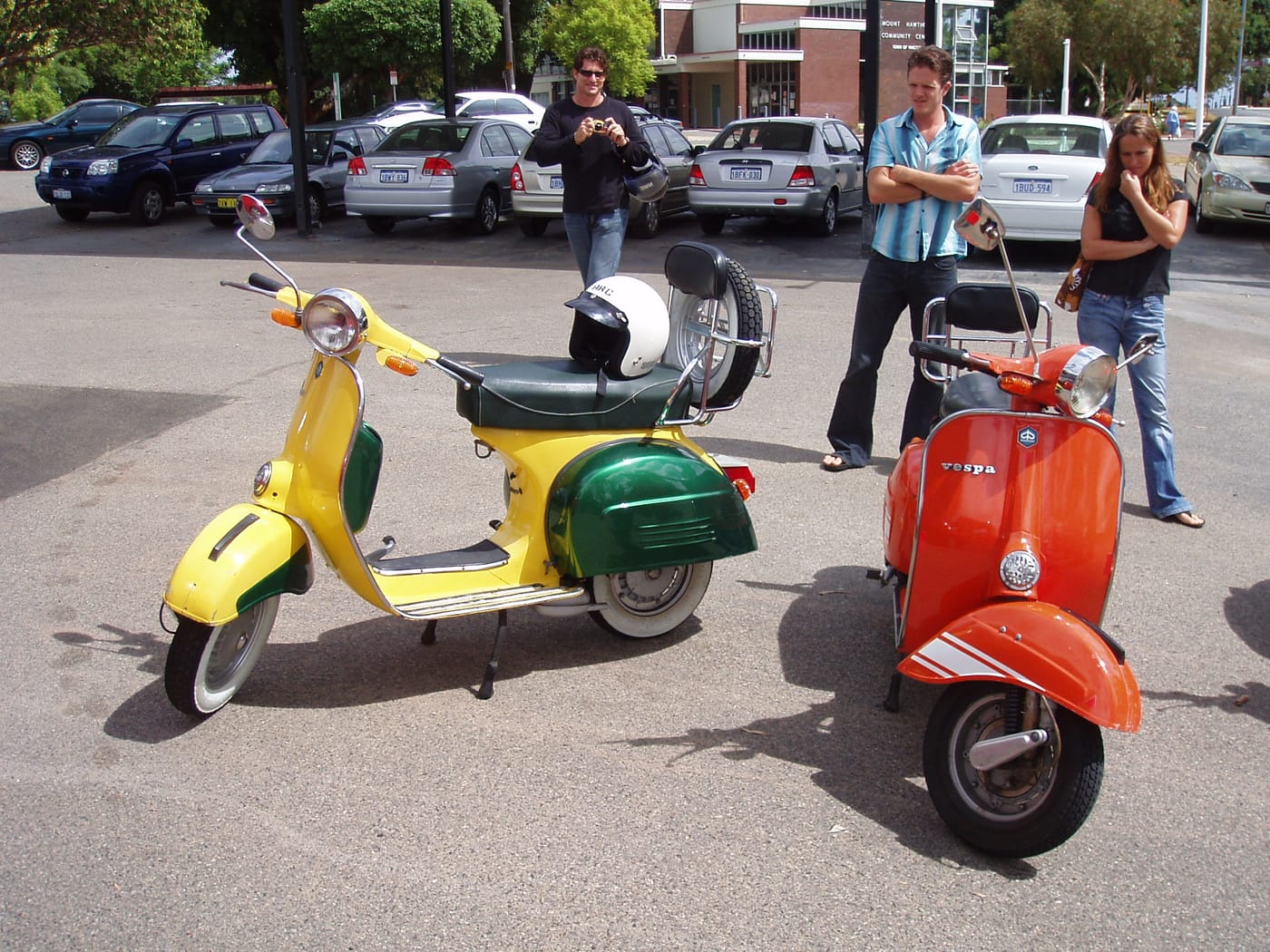
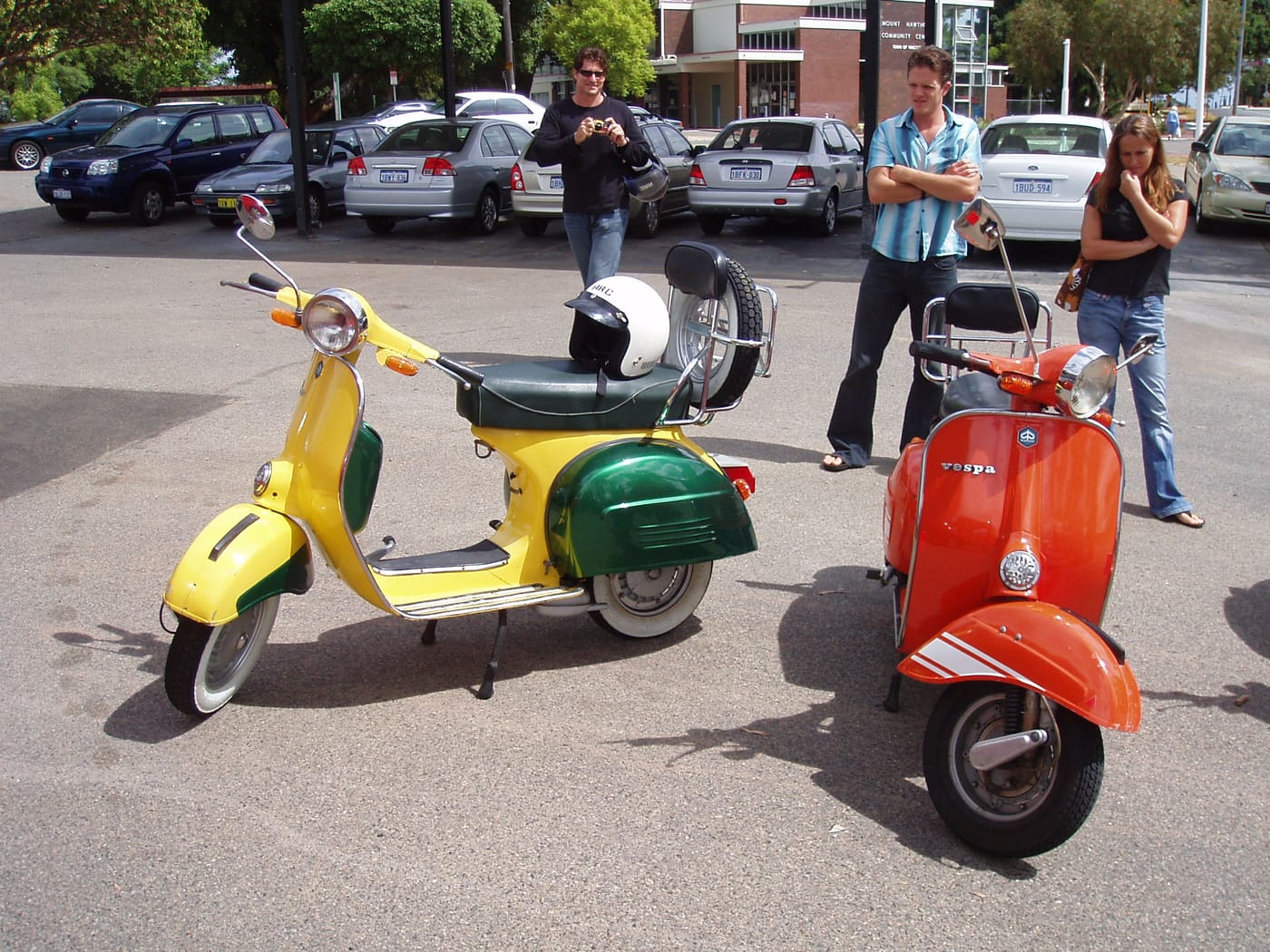
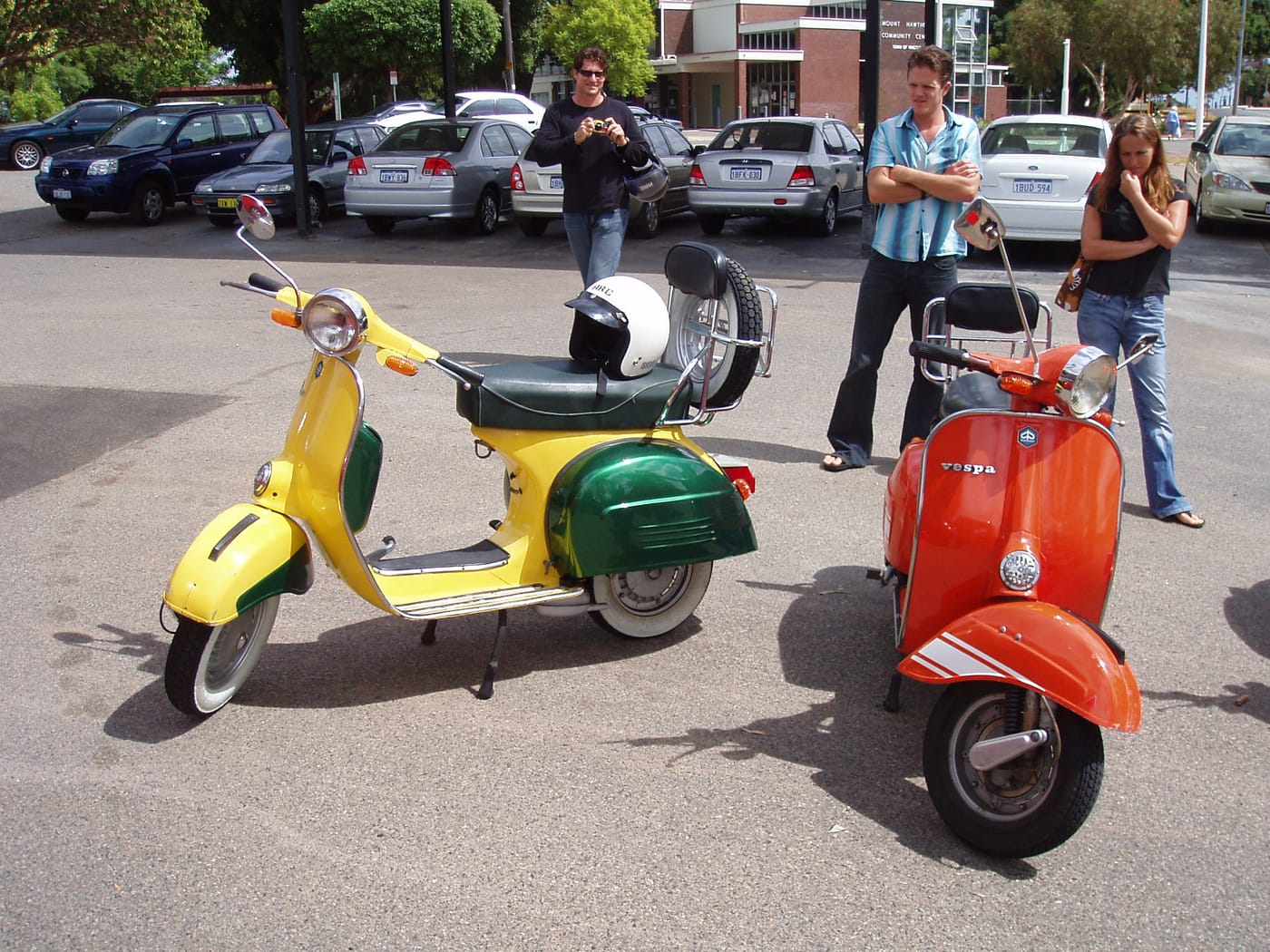
Vespa Px 150
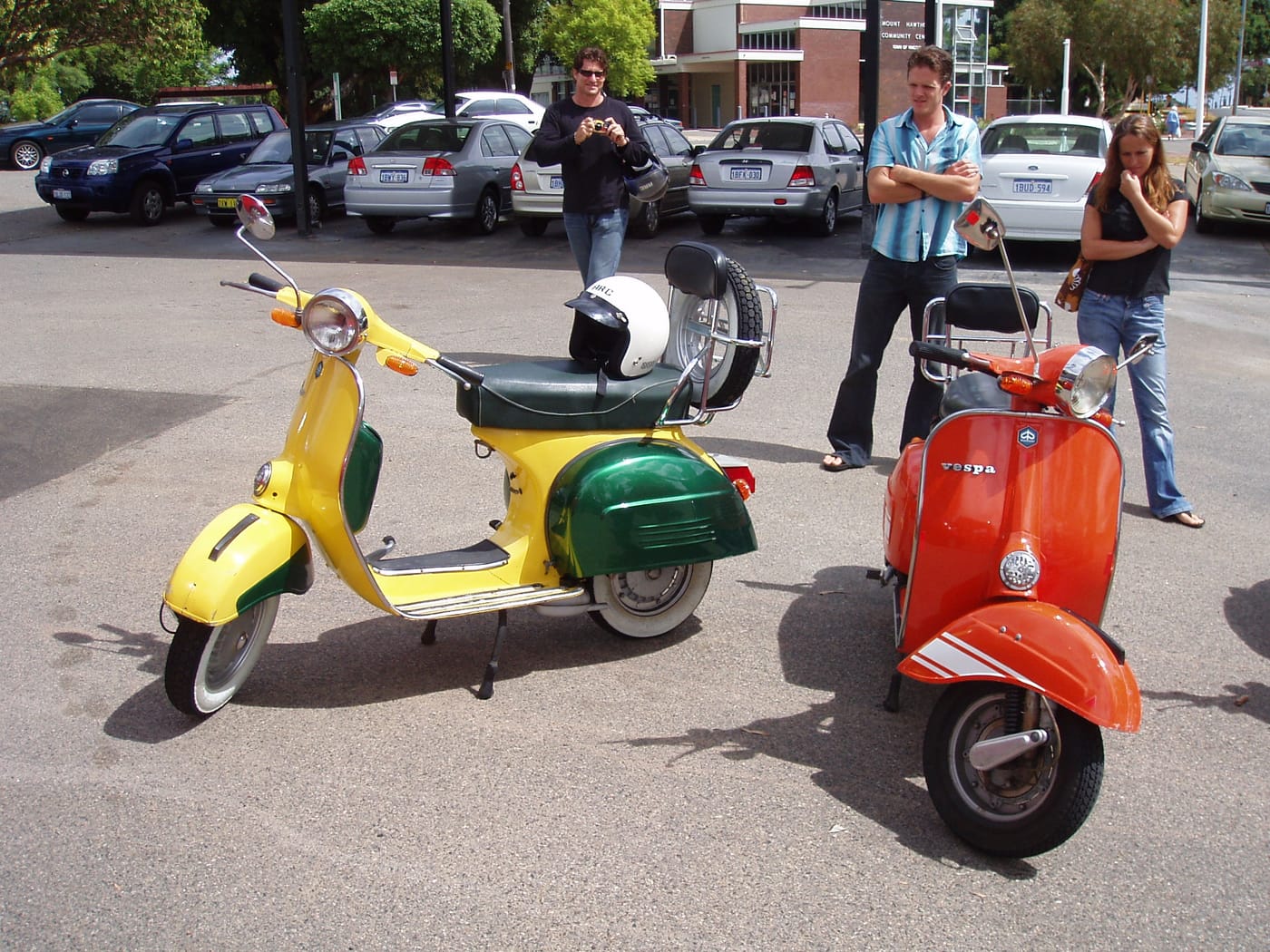
The Vespa Px 150 has a top speed of 95 km/h, produces 7.4 hp and weighs 115 kg. Motoryk rates it 7.5/10.
The Vespa PX 150 was introduced by Piaggio in 1977 as a successor to the Vespa Rally and large-frame Sprint series, featuring a redesigned body with angular styling that became iconic. It underwent several updates over its long production run, including the addition of an electric start variant and fuel injection (PX 150 E) in later years, making it one of the longest-produced scooter models in history. The PX series is widely regarded as the definitive classic Vespa, beloved for its all-metal construction, two-stroke engine simplicity, and timeless design that kept it in production into the 2010s.
7.4 hp
Power
10.2 Nm
Torque
115 kg
Weight
95 km/h
Top Speed
2.5 L/100km (approx. 40 km/L)
Fuel
Faired
Body
🔧 Service Schedule & Parts
Affiliate · we may earn| Service item | Every | Typical cost | Parts |
|---|---|---|---|
| 🛢️ Engine oil + oil filter | 3,000 km / 2,000 mi or 12 mo | $20-40 | 🛢️ Buy → ⚙️ Buy → |
| 🌬️ Air filter | 6,000 km / 3,500 mi | — | 🌬️ Buy → |
| ⚡ Spark plugs | 6,000 km / 3,500 mi | — | ⚡ Buy → |
| 🛑 Brake pads | 15000-25000 km | $30-60 | 🛑 Buy → |
| 💧 Brake fluid | 24,000 km / 15,000 mi or 2 yr | — | |
| 🛞 Tires | 15000-25000 km | $150-300 | 🛞 Buy → |
| 🔩 Major service | 12,000 km / 7,500 mi | $150-350 |
Video Review
What Buyers Should Know
Bulletproof 2-Stroke Engine
The PX 150's rotary valve 2-stroke engine is renowned for lasting well over 100,000 km with basic maintenance. Its simple design means fewer parts to fail and easy DIY repairs.
Watch the Gearbox
The selector box and gear cables are common wear points — always test all 4 gears before buying. Worn selector pawls can cause missed or stuck gears and are an early red flag.
Strong Resale Value
The PX 150 holds its value exceptionally well due to its cult following and discontinued production status. Well-maintained examples often sell at or above purchase price in many markets.
Generations & Specs by Year
Introduced as PX series replacing GT/TS; electronic ignition, new frame, mixed brakes front drum rear drum.
"Italy's finest urban tool, frustrating and brilliant simultaneously."
I put 18,000 kilometers on a '79 PX150 across Rome and the Tuscan backroads, and the electronic ignition upgrade over the old points-based GT genuinely made a difference — cold starts went from a lottery to a reliable two-kick ritual. The indirect gear shift through that bizarre twist-and-click handlebar mechanism never stopped feeling counterintuitive, and threading Roman traffic at 80 km/h with drum brakes front and rear demands genuine respect and planning distance. That 150cc two-stroke pulls cleanly from 3,500 rpm and will genuinely surprise car drivers on urban stretches, but ask it to sustain 90 km/h on the autostrada shoulder and the vibes through the floorboard become a conversation you didn't want to have. The monocoque steel body is both its charm and its liability — it rides like a proper scooter should, planted and purposeful, but one careless parking scrape costs you real money.
Pros
Cons
Restyled bodywork, indicators integrated into headset, updated graphics and seat design, minor engine refinements.
"Timeless city scooter that earns its cult status."
I rode an '89 PX 150 daily for two years through Rome and later London, and the thing that strikes you first is how mechanically honest it feels — every gear change through that left-hand twist shifter is deliberate, almost ceremonial, and you either love that or you hate it. The Arcobaleno's integrated indicators clean up the headset nicely over the older PX, and the updated seat is marginally more tolerable on longer runs, but let's be real: past 45 minutes your backside is done. The 149cc two-stroke pulls well enough in traffic and will genuinely touch 95 km/h on a flat, but it's breathless on motorway on-ramps and hates headwinds. Reliability is solid if you stay on top of the two-stroke mix and don't ignore the gearbox oil — neglect either and you'll learn expensive lessons fast.
Pros
Cons
Minor cosmetic updates, catalyst option introduced for some markets, updated colour palette.
"Timeless icon that demands patience and affection."
I ran a Millennium PX 150 as my daily commuter for two years in Rome and later London, and the thing taught me as much about mechanical humility as it did about riding pleasure. That rotary gear shift takes a solid week to stop embarrassing you at intersections, and once the two-stroke hits its narrow powerband around 5,000 rpm it pulls with a satisfying urgency that masks just how modest the numbers actually are. The catalyst-equipped variant I tested felt slightly strangled compared to the non-cat version a colleague ran alongside me — noticeably lazier off the line, marginally hotter running in traffic. What Piaggio changed for the Millennium edition amounts to new colour options and some chrome trim tweaks, which is either reassuring proof of a perfected formula or evidence that the accounting department runs the product division — depending on your mood.
Pros
Cons
Euro 2 emissions compliance, catalytic converter added, automatic oil mixing introduced, disc brake option on some variants.
"Timeless icon hobbled by compromise, still worth loving."
I put about 8,000 km on a 2004 PX150 over two years of city commuting and weekend blasts, and the truth is complicated. The catalytic converter and auto-oil mixing were sensible updates — no more premixing fuel and far fewer blue-smoke complaints from pedestrians — but the cat chokes the already-modest 5.5 horses noticeably at anything above 70 km/h, where the old carb-and-reed setup had more snap. The separate gearbox and handshift remain a genuinely pleasurable anachronism, and the all-steel body shrugs off urban scrapes that would write off a plastic modern scooter, but that 115 kg wet weight means low-speed manoeuvring in tight car parks is a genuine workout. The optional front disc brake was a meaningful upgrade over the drum — grab it if you can find a disc-equipped example — because the rear drum alone gives you heart palpitations in the wet.
Pros
Cons
Reintroduced after brief hiatus; Euro 3 compliance, electronic fuel mixture updates, drum brakes retained, classic styling preserved.
Used Buyer Review
"A genuinely rewarding scooter that punishes neglect and rewards dedication."
$2,500-$5,500 usedThe PX150 is one of those bikes that makes zero compromises for your convenience — and somehow that's exactly why people love it. This is old-school Italian engineering with a two-stroke heart (or four-stroke on later models), a heel-toe gearchange, and absolutely no concession to modern rider expectations. It vibrates, it demands attention, and it will teach you what mechanical sympathy actually means. That's not a complaint. That's the deal. Buying used, you need to check three things obsessively: corrosion on the monocoque bodywork (it's structural, not just cosmetic), gearbox wear on the selector forks, and whether the previous owner actually serviced it. A neglected PX is a money pit. A maintained one will run forever. Earlier carb models are simpler to work on; post-2011 four-strokes are smoother but lose some character. Budget for a full service immediately regardless.
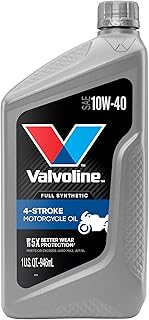
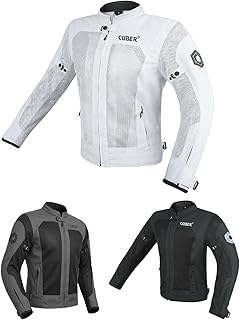
Top 10 Accessories
Curated picks for the Vespa Px 150 — owned, ridden, recommended.




Common Problems
🔥 2 CRITICALOil residue around engine casing and exhaust smoke
Cold start difficulty, rough idle, fuel smell
Stiff lever pull, uneven braking, cable fraying
Clunky shifts, neutral hard to find, slipping
✅Pre-Purchase Checklist
Solid if maintained, expensive when neglected
Full Specifications
Rivals & Alternatives
Bikes that buyers cross-shop with the Vespa Px 150
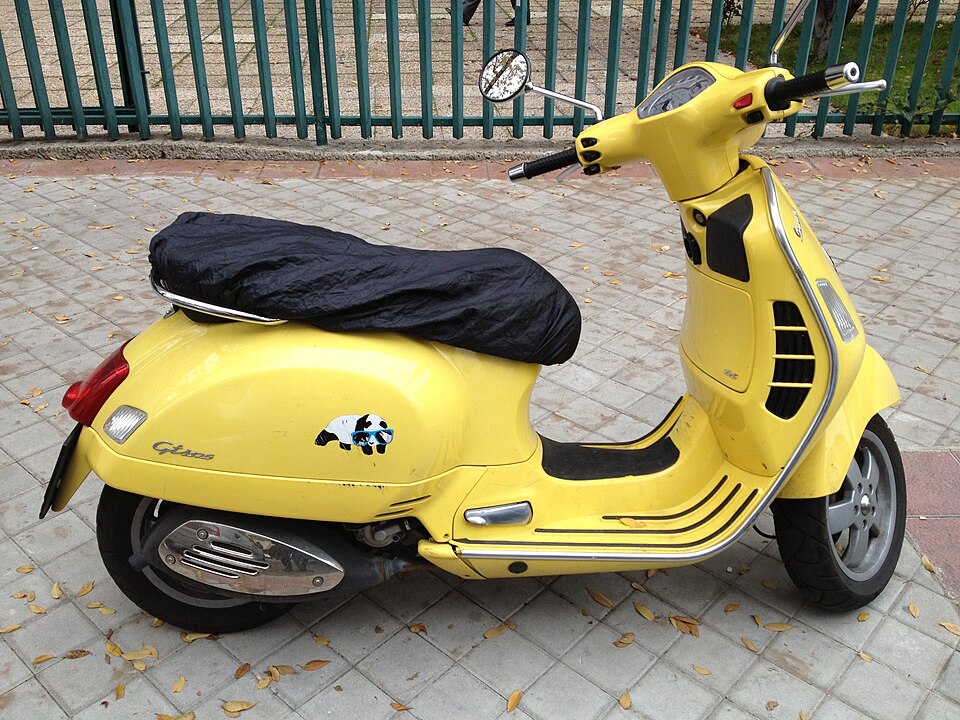
Vespa Gts 125
Vespa Et4 150
Piaggio Vespa Lx 150
Piaggio Vespa Primavera 150
Piaggio Vespa Sprint 150
Compare Vespa Px 150 Side-by-Side
compare_arrowsSpecs, power, weight & buyer verdict — head-to-head with the bikes most often cross-shopped.
Vespa Px 150 vs Vespa Gts 125
Specs · Power · Buyer verdict
Vespa Px 150 vs Vespa Et4 150
Specs · Power · Buyer verdict
Vespa Px 150 vs Piaggio Vespa Lx 150
Specs · Power · Buyer verdict
Vespa Px 150 vs Piaggio Vespa Primavera 150
Specs · Power · Buyer verdict
Vespa Px 150 vs Piaggio Vespa Sprint 150
Specs · Power · Buyer verdict
More Vespa Px 150 Guides
More from Vespa
View all Vespa models →Community Reviews
Discussion
Frequently Asked Questions
What are common problems with the Vespa Px 150? +
Crankshaft seal failure causing oil leaks: Oil residue around engine casing and exhaust smoke (serious) | Carburettor wear causing poor starting: Cold start difficulty, rough idle, fuel smell (moderate) | Corroded or seized brake cables: Stiff lever pull, uneven braking, cable fraying (moderate)
Is the Vespa Px 150 a good motorcycle? +
A genuinely rewarding scooter that punishes neglect and rewards dedication. Rating: 7.5/10. Best for: Urban romantics who actually enjoy mechanical involvement. Avoid if: You want effortless, modern, automatic urban transport.
What is the horsepower of the Vespa Px 150? +
The Vespa Px 150 produces 7.4 hp @ 6,200 rpm, with 10.2 Nm @ 4,500 rpm of torque. Top speed: 95 km/h.
Is the Vespa Px 150 good for beginners? +
Yes — the Vespa Px 150 is a reasonable choice for new riders (7.4 hp is manageable), weighing 115 kg. Urban romantics who actually enjoy mechanical involvement
Is the Vespa Px 150 reliable? +
Owners report 2 critical issues to watch for on the Vespa Px 150, notably: Crankshaft seal failure causing oil leaks (Oil residue around engine casing and exhaust smoke). Buy with a pre-purchase inspection.
Is the Vespa Px 150 good for daily use? +
Urban romantics who actually enjoy mechanical involvement Fuel: 2.5 L/100km (approx. 40 km/L).
How fast is the Vespa Px 150? +
The Vespa Px 150 reaches a top speed of 95 km/h, producing 7.4 hp at 115 kg curb weight. Real-world performance depends on rider weight, gearing, and road conditions.
What gear should I buy for a Vespa Px 150? +
Motoryk has curated a Top 10 gear list specifically for the Vespa Px 150, covering engine oil, tires, chain, battery, and brake pads — see motoryk.com/bikes/vespa/px-150/top10. Each pick is matched to this bike's spec.