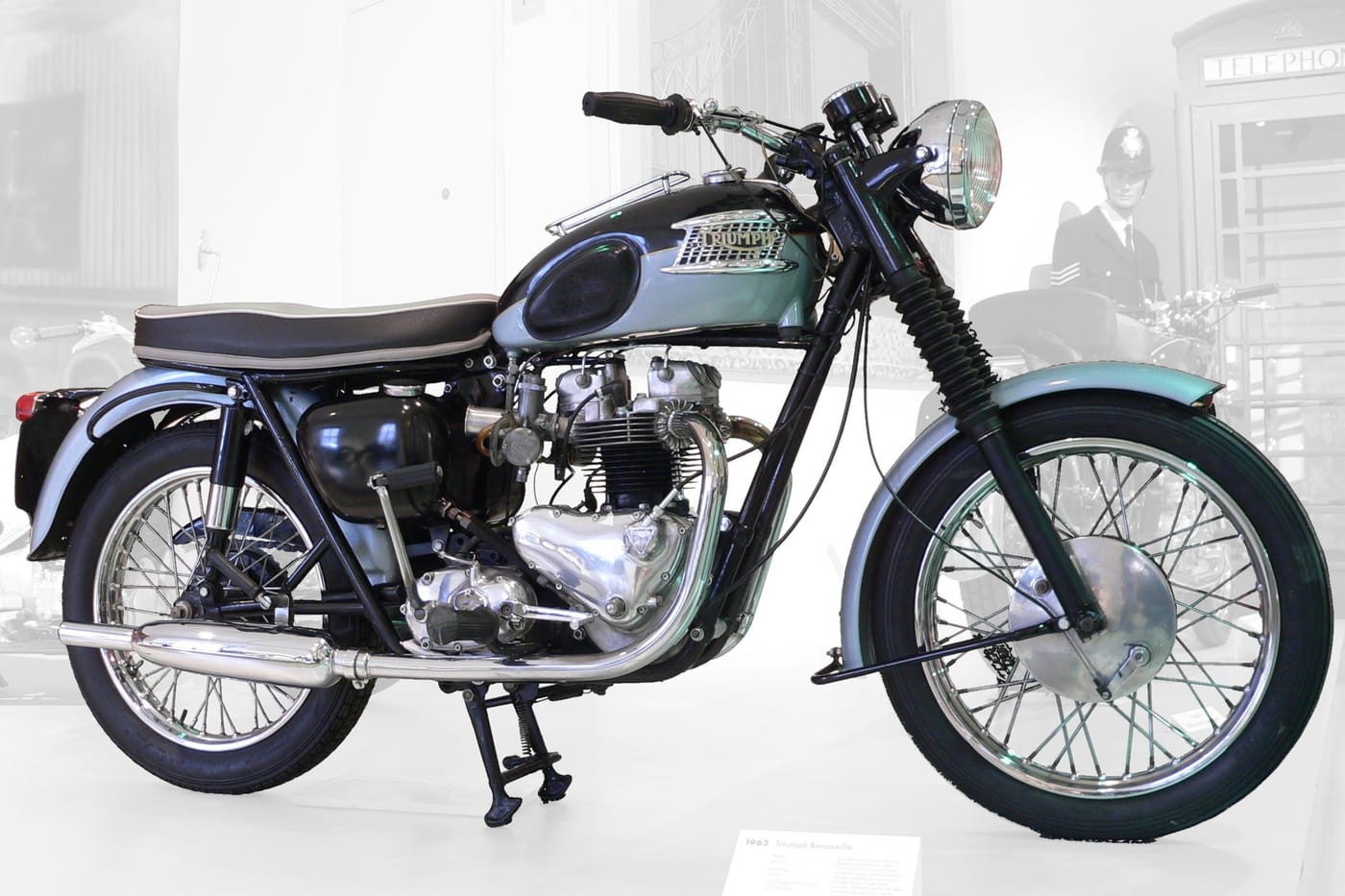
Triumph Bonneville T120
The Triumph Bonneville T120 has a top speed of 193 km/h, produces 80 hp and weighs 228 kg. Motoryk rates it 8.5/10.
The Triumph Bonneville was first introduced in 1959, named after the Bonneville Salt Flats where Johnny Allen set a land speed record on a Triumph-powered streamliner in 1956. The modern T120 was relaunched in 2016 as part of Triumph's new water-cooled Bonneville family, featuring a 1200cc parallel-twin engine while retaining classic styling cues. It remains one of the most iconic and recognizable motorcycles in history, celebrated for its blend of British heritage, timeless design, and modern performance.
80 hp
Power
105 Nm
Torque
228 kg
Weight
193 km/h
Top Speed
4.5 L/100km (approx. 22 km/L real-world average)
Fuel
Naked
Body
🔧 Service Schedule & Parts
Affiliate · we may earn| Service item | Every | Typical cost | Parts |
|---|---|---|---|
| 🛢️ Engine oil + oil filter | 6,000 km / 3,500 mi or 12 mo | $40-80 | 🛢️ Buy → ⚙️ Buy → |
| 🌬️ Air filter | 12,000 km / 7,500 mi | — | 🌬️ Buy → |
| ⚡ Spark plugs | 12,000 km / 7,500 mi | — | ⚡ Buy → |
| 🔧 Valve clearance check | 24,000 km / 15,000 mi | $200-400 | |
| 🔗 Chain & sprockets | 25000-40000 km (replace) | $150-300 | 🔗 Buy → |
| 🛑 Brake pads | 15000-30000 km | $30-60 | 🛑 Buy → |
| 💧 Brake fluid | 24,000 km / 15,000 mi or 2 yr | — | |
| 🧊 Coolant | 24,000 km / 15,000 mi | — | |
| 🛞 Tires | 10000-20000 km | $200-400 | 🛞 Buy → |
| 🔩 Major service | 24,000 km / 15,000 mi | $350-650 |
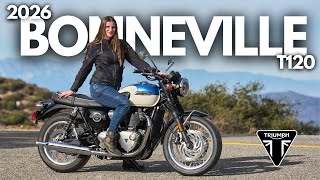
Video Review
What Buyers Should Know
Strong Long-Term Reliability
The modern T120's 1200cc liquid-cooled parallel-twin is far more dependable than classic Bonnevilles, with most owners reporting trouble-free riding well past 30,000 miles when serviced on schedule.
Watch for Recalls
Early 2016-2017 models had software and throttle-by-wire issues addressed via dealer recalls — always verify the VIN history to confirm all outstanding recalls were completed before buying used.
Holds Value Well
The T120 retains resale value better than most middleweight bikes due to the iconic Bonneville name and consistent demand, typically holding 65-75% of its value after three years.
Generations & Specs by Year
Original 649cc parallel twin, pre-unit construction, separate gearbox, twin carburetors, duplex frame.
"The bike that invented the template everyone else copies."
That 649cc twin pulls hard from 3,500 rpm and just keeps building — at 6,000 rpm on an open A-road it feels genuinely urgent, not just fast-for-its-era. The pre-unit gearbox needs a deliberate, unhurried hand; rush it and you'll get neutrals between second and third that'll embarrass you at a junction. Oil leaks from the primary chaincase and pushrod tunnels aren't a maybe, they're a when — budget time on the garage floor every few weeks. But when it's right, the twin carbs breathing in sync and that exhaust crackling on the overrun, there's a mechanical honesty here that no modern retro has ever fully captured.
Pros
Cons
Unit construction engine introduced, gearbox integrated into engine cases, revised frame and styling.
"The benchmark British twin that earned every legend."
The unit-construction engine was a genuine step forward — tighter, less prone to the oil weeping that plagued pre-unit bikes, and the integrated gearbox actually shifts with some confidence once you learn its deliberate, clunky rhythm. At speed on an open A-road, the Bonnie pulls hard through the midrange with that distinctive parallel-twin throb that no modern bike has quite replicated, and at 175 km/h it feels genuinely alive rather than merely fast. The downsides are real though: Lucas electrics remain an ongoing negotiation rather than a system you trust, points ignition demands frequent attention, and the front drum brake is adequate at best — haul on it hard in an emergency and you'll be revising your expectations sharply. I've owned two of these across a decade and the honest truth is you maintain the relationship as much as you ride it, but nothing else from this era rewards that investment so completely.
Pros
Cons
Oil-in-frame design introduced, revised geometry, new frame raised oil tank location.
"Triumph's boldest gamble that nearly broke everything."
I ran a '72 T120 for two seasons and the oil-in-frame concept was either genius or madness depending on which week you asked me — the raised oil location shifted the centre of gravity noticeably higher, making slow-speed manoeuvring feel oddly top-heavy compared to my old '69. On open roads above 80 km/h it settles beautifully, that 649cc parallel twin pulling with that characteristic breathy growl right through to an honest 160 km/h before things get agricultural. The revised geometry tightened steering response but introduced a nervousness mid-corner that earlier Bonnevilles simply didn't have. Oil leaks from the frame junction welds were a genuine period problem — mine seeped constantly until a specialist re-sealed the lower frame section, and that's a cost and headache Triumph should have sorted before shipping.
Pros
Cons
Revised oil-in-frame refined, disc front brake added, US-spec models with emissions updates.
"Glorious engine, frustrating everything else — but you'll forgive it."
That 744cc twin still has a voice like nothing else on the road — a proper thump at low revs that turns into a hard, mechanical bark past five grand, and I never got tired of hearing it. The oil-in-frame revision helped with cooling on long summer runs, though the frame itself always felt slightly nervous in fast sweepers, like it couldn't quite commit to what the engine was promising. The new front disc brake was a genuine step forward over the old twin-leading-shoe drum, but 'improved' is relative — two fingers and faith is still the operating procedure in the wet. US-spec emission-strangled carb jetting made the low-to-mid throttle response woolly and irritating, and sorting that out was the first thing any sensible owner did before the bike left the driveway.
Pros
Cons
Limited production revival by co-operative workers at Meriden and later Devon, carbureted twin.
Hinckley-era relaunch, 865cc fuel-injected parallel twin, modern chassis, classic retro styling retained.
"The Bonneville earns its legend without coasting on nostalgia."
After 18 months and 14,000 km on an '09 T100 and a borrowed T120, I can tell you the 865 Bonnie is genuinely good rather than just pretty — the parallel twin pulls cleanly from 3,000 rpm, feels alive in the midrange, and rewards lazy, unhurried riding in a way modern bikes rarely do. Fuel injection sorted the cold-start carburetor drama of early Hinckley bikes, though throttle response below 2,500 rpm stays slightly wooden until the engine warms through. At 224 kg wet it's heavier than it looks, and that becomes obvious manoeuvring in car parks or when a slow-speed tip catches you off guard. The seat is genuinely comfortable for two-hour stints but the stock suspension is set up soft — hit a mid-corner bump at pace and the rear squirms in a way that'll tighten your grip on the bars.
Pros
Cons
New 1200cc high-torque parallel twin, ride-by-wire, traction control, modern electronics, updated styling.
Used Buyer Review
"The finest modern classic money can buy used, full stop."
$7,500-$11,500 usedThe T120 is the real deal — Triumph finally nailed the modern classic formula when they launched the water-cooled 1200 in 2016. That parallel twin pulls cleanly from low revs, sounds genuinely gorgeous through the standard pipes, and the ride quality is surprisingly sorted for a retro-styled bike. If you're coming from a carb-fed classic, this thing feels almost luxurious. Check early 2016-2017 bikes carefully for throttle bodies and fuel mapping issues — some owners reported hesitant low-speed fuelling, which Triumph largely sorted by 2018 with software updates. For used buying, inspect the fork seals and rear suspension linkage on higher-mileage examples. Previous owners tend to either pamper these or thrash them on weekend pub runs, so service history matters more than mileage here. The chrome bits look stunning but show wear quickly — budget for that. Avoid anything modified with non-standard pipes unless you want an MOT headache and a bike that pops like a popcorn machine.
Variants of the Triumph Bonneville T120
Same bike, different trim or year-range — pick the one matching the listing.
Top 10 Accessories
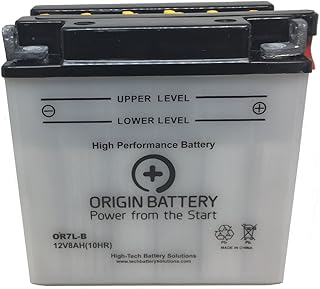
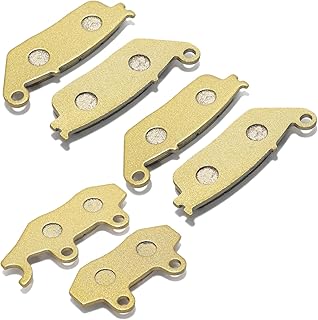
Curated picks for the Triumph Bonneville T120 — owned, ridden, recommended.




Common Problems
🔥 1 CRITICALCold start behavior, idle smoothness, fuel pump recall status
Rattling on cold start, disappears when warm
Uneven braking, dragging, inspect caliper pistons visually
Check all warning lights, connectivity, software update history
✅Pre-Purchase Checklist
Generally solid, minor issues manageable with maintenance
Full Specifications
Rivals & Alternatives
Bikes that buyers cross-shop with the Triumph Bonneville T120
Triumph Speed Twin 1200
Triumph Bonneville T100
Kawasaki W800
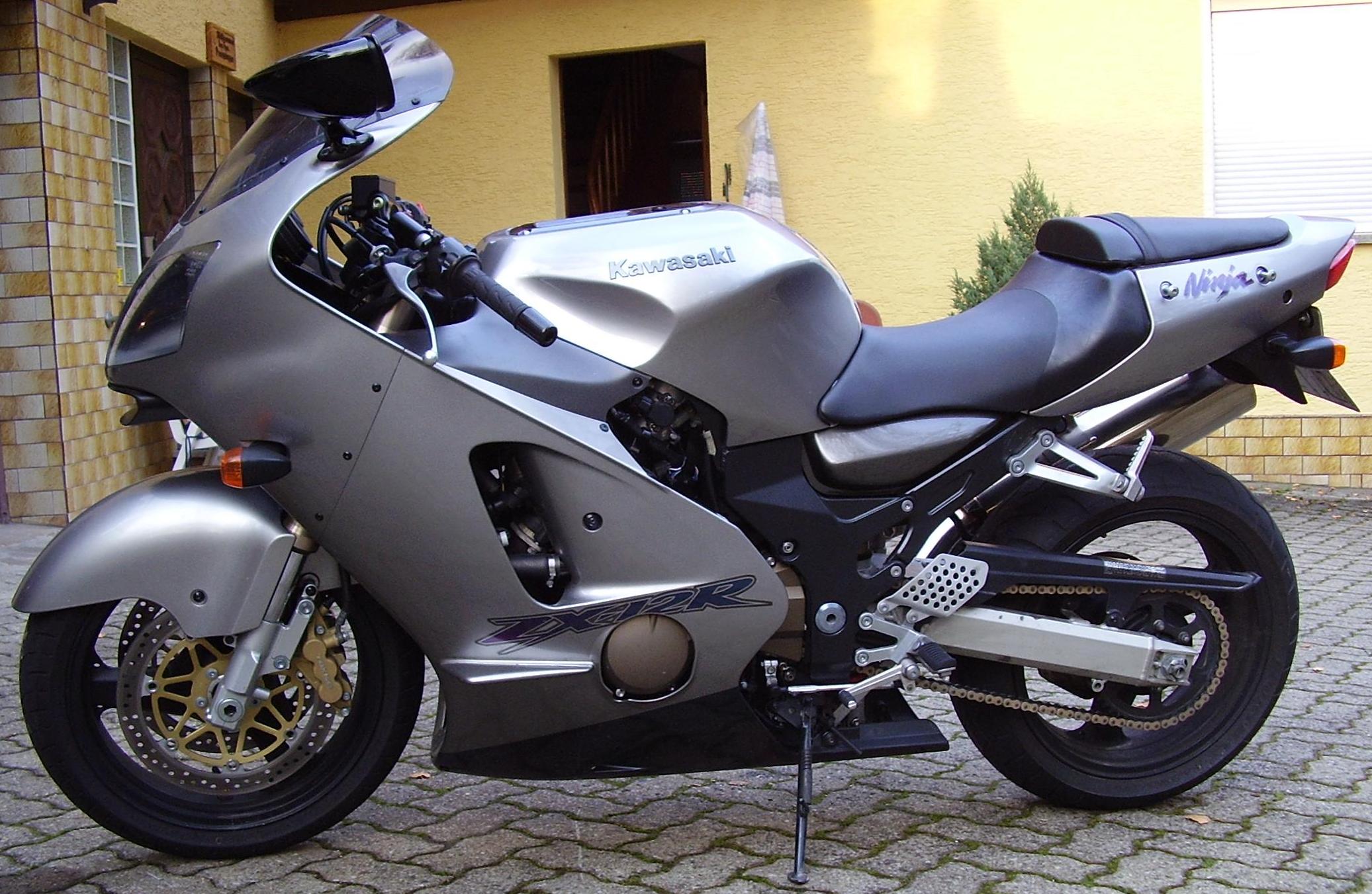
Kawasaki Z900rs
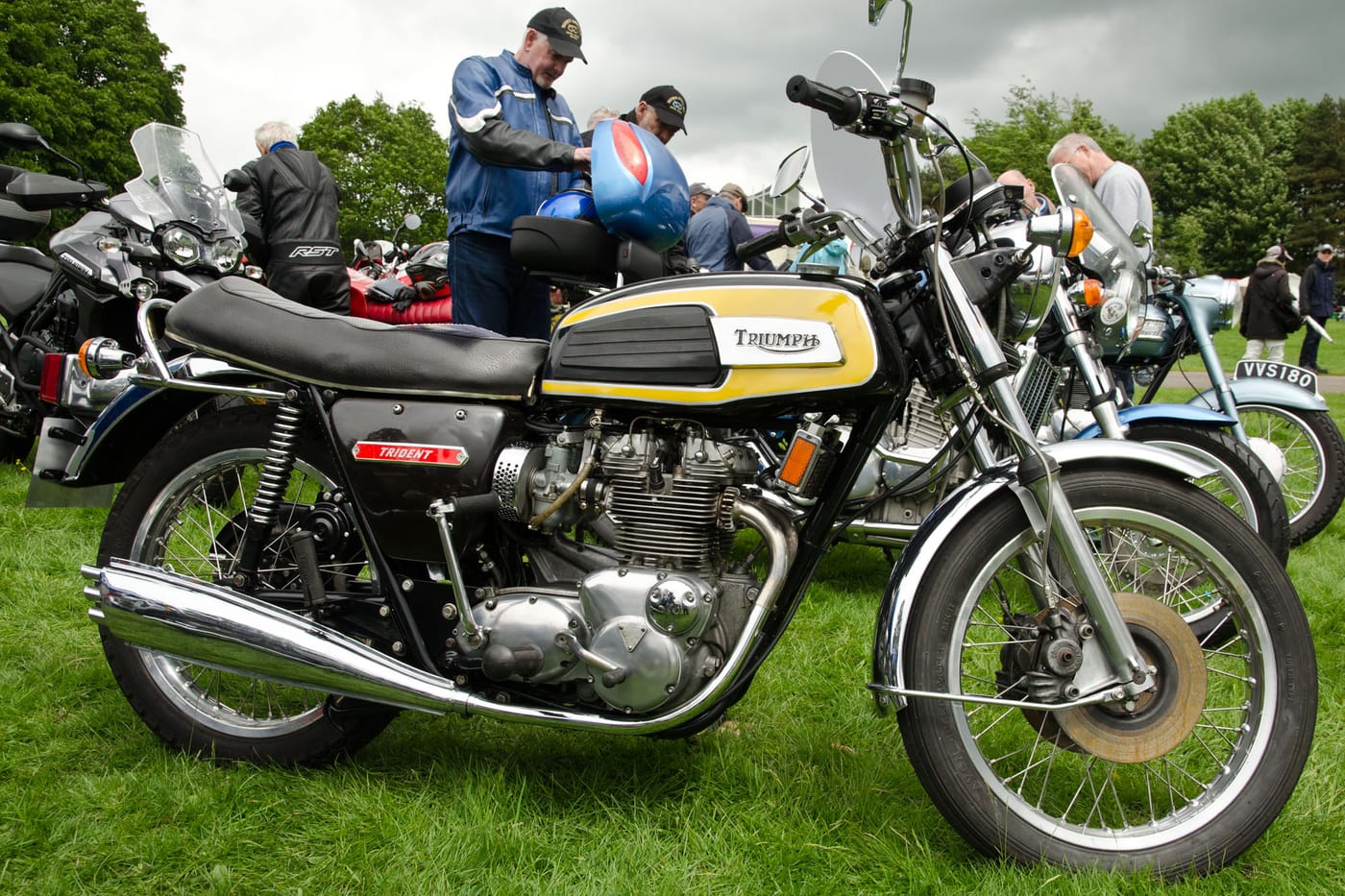
Triumph Bonneville Street Twin
Compare Triumph Bonneville T120 Side-by-Side
compare_arrowsSpecs, power, weight & buyer verdict — head-to-head with the bikes most often cross-shopped.
Triumph Bonneville T120 vs Triumph Speed Twin 1200
Specs · Power · Buyer verdict
Triumph Bonneville T120 vs Triumph Bonneville T100
Specs · Power · Buyer verdict
Triumph Bonneville T120 vs Kawasaki W800
Specs · Power · Buyer verdict
Triumph Bonneville T120 vs Kawasaki Z900rs
Specs · Power · Buyer verdict
Triumph Bonneville T120 vs Triumph Bonneville Street Twin
Specs · Power · Buyer verdict
More Triumph Bonneville T120 Guides
More from Triumph
View all Triumph models →Community Reviews
Discussion
Frequently Asked Questions
What are common problems with the Triumph Bonneville T120? +
Fuel system vapor lock or rough idle: Cold start behavior, idle smoothness, fuel pump recall status (moderate) | Cam chain tensioner noise at startup: Rattling on cold start, disappears when warm (moderate) | Brembo brake caliper corrosion or seizing: Uneven braking, dragging, inspect caliper pistons visually (serious)
Is the Triumph Bonneville T120 a good motorcycle? +
The finest modern classic money can buy used, full stop. Rating: 8.5/10. Best for: Style-conscious riders wanting real-world usability daily. Avoid if: You need track performance or serious off-road capability.
What is the horsepower of the Triumph Bonneville T120? +
The Triumph Bonneville T120 produces 80 hp @ 6,550 rpm, with 105 Nm @ 3,500 rpm of torque. Top speed: 193 km/h.
Is the Triumph Bonneville T120 good for beginners? +
Not really — the Triumph Bonneville T120 is better for experienced riders. Style-conscious riders wanting real-world usability daily Avoid if: You need track performance or serious off-road capability
Is the Triumph Bonneville T120 reliable? +
Owners report 1 critical issue to watch for on the Triumph Bonneville T120, notably: Brembo brake caliper corrosion or seizing (Uneven braking, dragging, inspect caliper pistons visually). Buy with a pre-purchase inspection.
Is the Triumph Bonneville T120 good for daily use? +
Style-conscious riders wanting real-world usability daily Fuel: 4.5 L/100km (approx. 22 km/L real-world average).
How fast is the Triumph Bonneville T120? +
The Triumph Bonneville T120 reaches a top speed of 193 km/h, producing 80 hp at 228 kg curb weight. Real-world performance depends on rider weight, gearing, and road conditions.
What gear should I buy for a Triumph Bonneville T120? +
Motoryk has curated a Top 10 gear list specifically for the Triumph Bonneville T120, covering engine oil, tires, chain, battery, and brake pads — see motoryk.com/bikes/triumph/bonneville-t120/top10. Each pick is matched to this bike's spec.