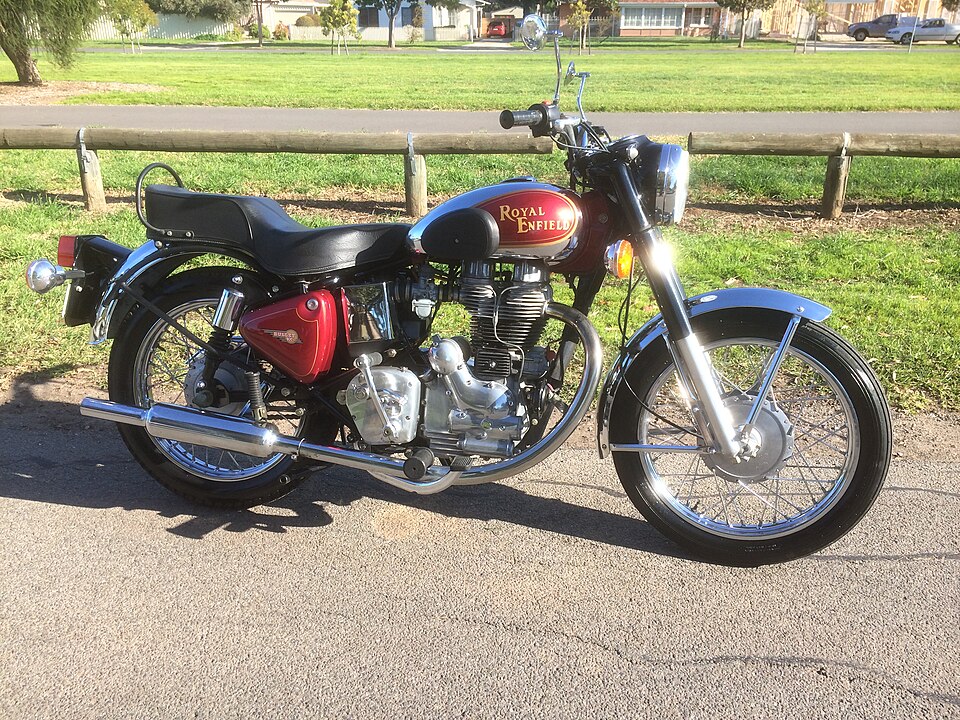
Royal Enfield Bullet 500
The Royal Enfield Bullet 500 has a top speed of 130 km/h, produces 27.5 hp and weighs 191 kg. Motoryk rates it 6.5/10.
The Royal Enfield Bullet 500 traces its roots to 1931, making it one of the longest-running motorcycle models in history. The modern single-cylinder 500cc unit construction engine era began in 1955, and production continued in India after the UK factory closed, with Royal Enfield India keeping the model alive through decades of continuous manufacturing. The Bullet 500 became an icon for its classic thumper character, widespread use by Indian military and police, and a devoted global following before being discontinued in most markets around 2020 due to Euro 5/BS6 emissions regulations.
27.5 hp
Power
41.3 Nm
Torque
191 kg
Weight
130 km/h
Top Speed
3.5 L/100km or approximately 28 km/L
Fuel
Naked
Body
🔧 Service Schedule & Parts
Affiliate · we may earn| Service item | Every | Typical cost | Parts |
|---|---|---|---|
| 🛢️ Engine oil + oil filter | 5,000 km / 3,000 mi or 6 mo | $30-60 | 🛢️ Buy → ⚙️ Buy → |
| 🌬️ Air filter | 10,000 km / 6,000 mi | — | 🌬️ Buy → |
| ⚡ Spark plugs | 10,000 km / 6,000 mi | — | ⚡ Buy → |
| 🔧 Valve clearance check | 20,000 km / 12,500 mi | $150-300 | |
| 🔗 Chain & sprockets | 20000-35000 km (replace) | $100-250 | 🔗 Buy → |
| 🛑 Brake pads | 15000-25000 km | $25-50 | 🛑 Buy → |
| 💧 Brake fluid | 24,000 km / 15,000 mi or 2 yr | — | |
| 🛞 Tires | 15000-25000 km | $150-350 | 🛞 Buy → |
| 🔩 Major service | 20,000 km / 12,500 mi | $200-500 |
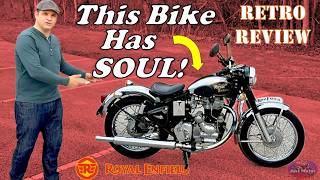
Video Review
What Buyers Should Know
Simple, Mechanic-Friendly Engine
The 499cc single-cylinder cast iron engine is decades-old technology, making it easy and cheap to repair almost anywhere in the world. Independent mechanics can service it without expensive dealer tools or diagnostics.
Watch for Oil Leaks
The Bullet 500 is notorious for weeping oil from gaskets, the rocker box, and primary chaincase — especially on older or poorly maintained units. Always inspect underneath before buying and factor in a gasket refresh if needed.
Strong Cult Resale Value
The Bullet 500 was discontinued in many markets after 2020, which has actually strengthened its used market appeal among enthusiasts and collectors. Well-maintained examples hold their value unusually well for a budget motorcycle brand.
Generations & Specs by Year
Original 499cc cast iron engine, rigid frame, girder forks, produced at Redditch, England.
"Cast-iron character that punishes every pothole personally."
The 499cc engine is a thumper in the truest sense — that long-stroke single fires with a cadence you feel in your molars, pulling strongly from 2,500 rpm with the kind of torque that makes town riding genuinely relaxed. But the rigid frame is no metaphor: every road seam, cobblestone, and railway crossing transmits directly into your spine, and after sixty miles you're done negotiating with it. The girder forks handle predictably on smooth tarmac but go vague and heavy on cambered bends, demanding respect and pre-planning rather than instinct. Oil weeps from every joint eventually, the magneto is temperamental in the damp, and kick-starting a flooded cast-iron barrel in January is a rite of passage nobody asked for.
Pros
Cons
Swingarm rear suspension introduced, telescopic front forks, modernised cycle parts, still Redditch built.
"Redditch iron finally learns to corner properly."
The swingarm changes everything — where the old rigid would kick and skitter over British B-roads, this Gen 2 actually tracks through bends with some composure, and the telescopic forks give you real feedback rather than that vague, sprung-girder guesswork. The 499cc pushrod single still pulls with that satisfying, lazy thump from about 2,500 rpm, and 35 Nm at your boot feels like genuine torque rather than just a number on a spec sheet. Oil seepage from the primary chaincase and rocker box remains a weekly ritual rather than a crisis, and the gearchange — positive on a good day — occasionally hunts for second like it's genuinely uncertain. But on a dry evening on empty lanes, nothing else from 1958 rides with quite this much honest, uncomplicated character.
Pros
Cons
Production transferred to India under Enfield India license, minor updates, basic design largely unchanged.
"Stubborn, charming, and perpetually asking for attention."
The Indian-built Bullet 500 is a bike you fall in love with despite itself — that long-stroke single thumps with genuine soul at 55 mph, and the upright riding position makes country lanes feel purposeful rather than punishing. But let's be honest: quality control from the Madras factory in the '70s and '80s was a lottery, and I've chased more oil weeps on mine than I care to admit. The cast-iron barrel takes forever to warm up properly, and if you're used to Japanese bikes of the same era, the gearchange will feel like stirring concrete with your foot. Still, nothing else on the road sounds or feels like this at idle — that mechanical bark at low revs is genuinely addictive, and it rewards riders who learn its rhythms rather than fight them.
Pros
Cons
Unit construction engine introduced replacing older separate gearbox design, improved reliability and oil tightness.
"Honest, characterful thumper that rewards patience over speed."
The unit construction engine was a genuine turning point — my '03 Bullet stopped weeping oil onto my boot within the first week, which older Enfield owners told me was practically a miracle. That 499cc single pulls from near-idle with a heavy, satisfying throb that no modern twin can fake, and cruising at 80–90 km/h on back roads feels exactly right, like the bike was built for that pace and nothing faster. Push past 110 km/h and the vibes migrate up through the bars and seat in a way that'll loosen your fillings on a long highway run — this is emphatically not a motorway bike. Reliability improved significantly over the separate-gearbox era, but you still need to budget time for a weekly check-over; these bikes talk to you through small leaks and rattles, and ignoring them is how you end up stranded.
Pros
Cons
Fuel injection added for select markets, AVL-developed engine internals, improved emissions compliance, minor cosmetic updates.
"Honest, unhurried thumper that earns its cult status."
After 18 months and 14,000 kilometres on a 2014 Bullet 500, I can tell you the AVL-developed engine is a genuine improvement over the old iron-barrel unit — smoother, oil-tighter, and it actually pulls cleanly from 2,000 rpm without the old snatchy carburetor behaviour on fuel-injected variants. That low-slung 41 Nm torque peak means you're mostly riding between 3,000 and 4,500 rpm, which suits the bike's unhurried character perfectly; try to hustle it and it'll politely remind you this isn't a sportsbike. The 191 kg weight is honest but manageable in town, though the brakes — especially the rear drum on base models — feel like they're from a different decade entirely. It vibrates through your hands above 90 km/h, the mirrors go blurry at highway speeds, and first gear is comically tall, but none of that stops you grinning at the exhaust note every single time you crack the throttle.
Pros
Cons
Used Buyer Review
"Pure character bike for patient riders who prioritize soul over speed."
$2,500-$4,500 usedThe Bullet 500 is one of those bikes that rewards patience and punishes impatience. Buy one knowing it'll need attention — oil leaks, electrical gremlins, and carburetor quirks are part of the package on pre-2020 units. That distinctive thump is genuinely addictive, and the upright riding position is brilliant for urban grinding or lazy weekend loops. It's not fast, and it doesn't pretend to be. Used examples vary wildly. Find one with full service history and ideally one careful owner who understood what they bought. Neglected Bullets deteriorate fast — check the primary chaincase for leaks, test the electrics thoroughly, and listen for timing chain rattle on startup. Avoid anything that's sat unused for over six months without fresh fluids. Here's the honest truth: it's a character bike, not a competent one. Riders who chase it for the experience — that slow, deliberate, thumping rhythm — will absolutely love it. Anyone expecting Japanese reliability or modern refinement will be perpetually disappointed.
Variants of the Royal Enfield Bullet 500
Same bike, different trim or year-range — pick the one matching the listing.
Top 10 Accessories
Curated picks for the Royal Enfield Bullet 500 — owned, ridden, recommended.




Common Problems
Look under engine for fresh oil stains or seepage
Check battery health, lights dimming at idle
Test all gears cold and hot, listen for grinding
Inspect mirrors, footpegs, and exhaust mounting bolts
✅Pre-Purchase Checklist
Reliable if maintained, needs regular attention
Full Specifications
Rivals & Alternatives
Bikes that buyers cross-shop with the Royal Enfield Bullet 500

Royal Enfield Classic 500
Kawasaki W800
Kawasaki W650
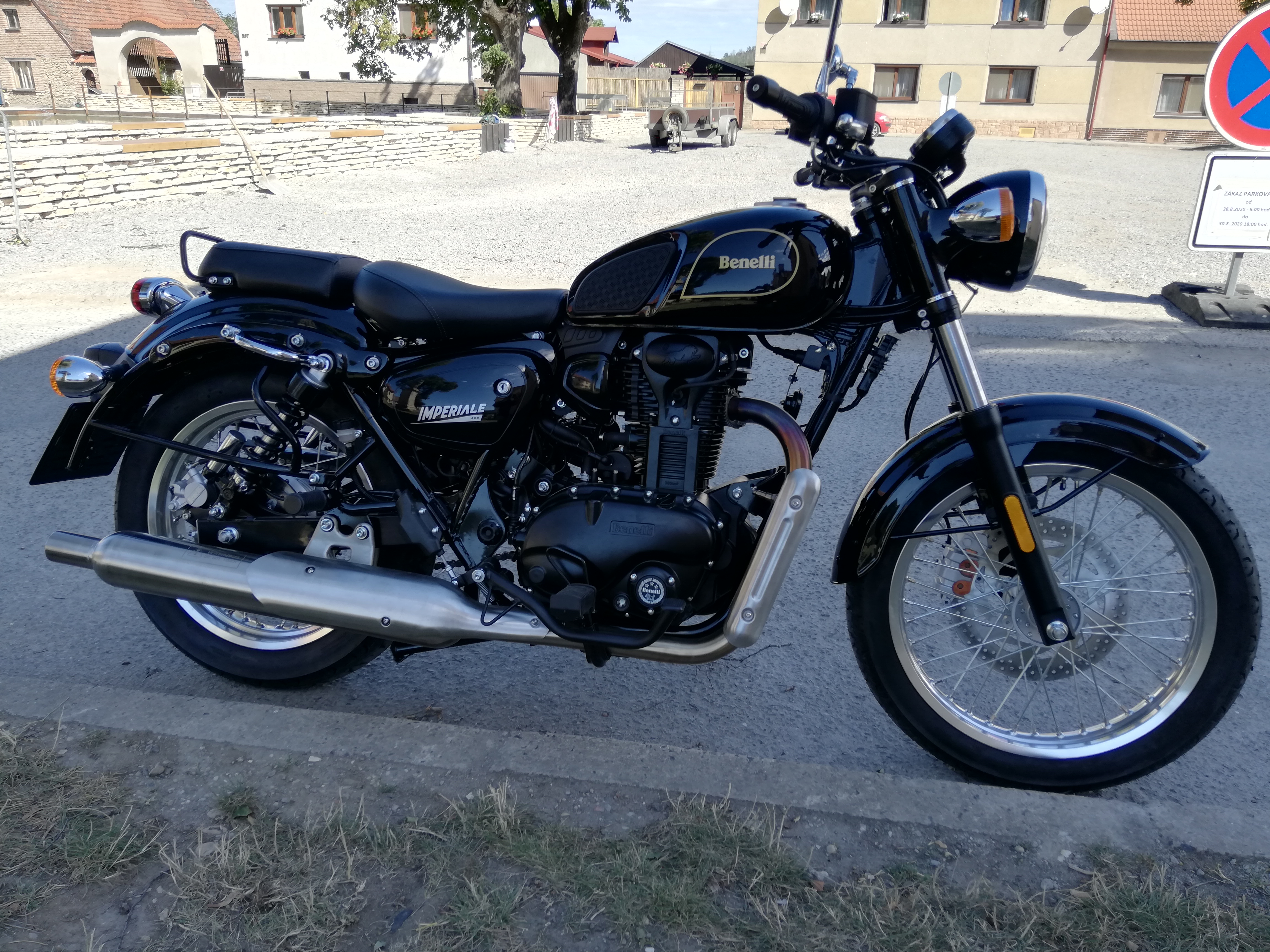
Benelli Imperiale 400
Royal Enfield Bullet 500 Es
Compare Royal Enfield Bullet 500 Side-by-Side
compare_arrowsSpecs, power, weight & buyer verdict — head-to-head with the bikes most often cross-shopped.
Royal Enfield Bullet 500 vs Royal Enfield Classic 500
Specs · Power · Buyer verdict
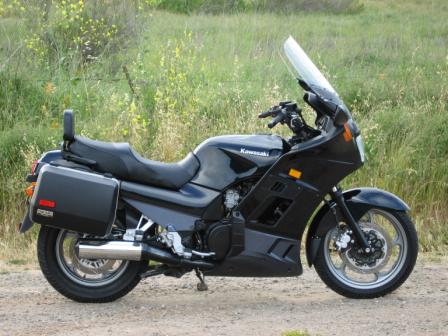
Royal Enfield Bullet 500 vs Kawasaki W800
Specs · Power · Buyer verdict
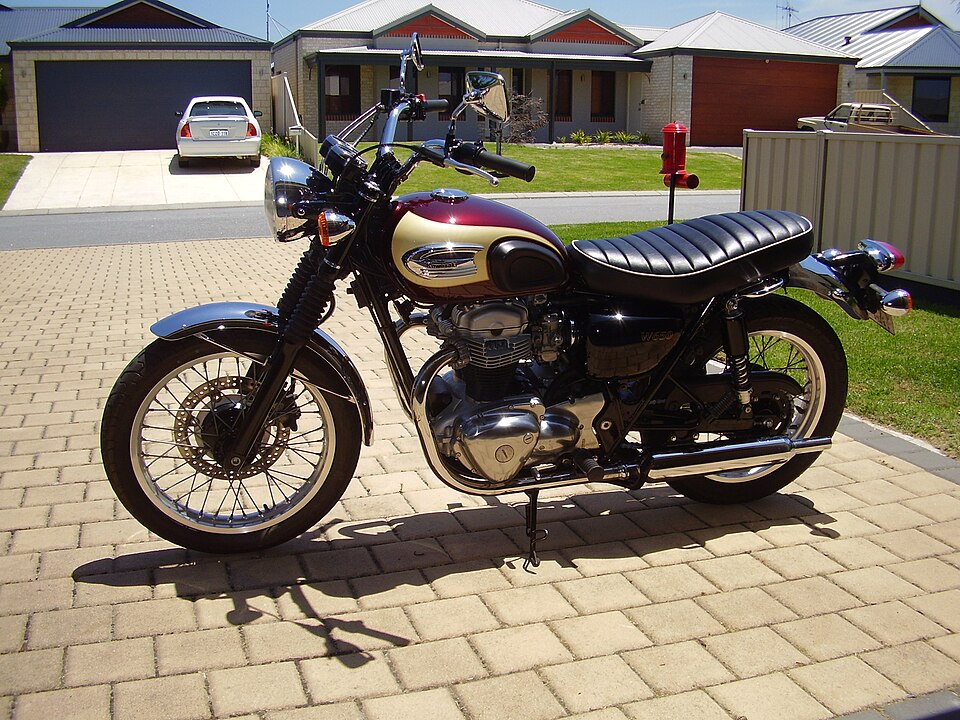
Royal Enfield Bullet 500 vs Kawasaki W650
Specs · Power · Buyer verdict
Royal Enfield Bullet 500 vs Benelli Imperiale 400
Specs · Power · Buyer verdict
Royal Enfield Bullet 500 vs Royal Enfield Bullet 500 Es
Specs · Power · Buyer verdict
More Royal Enfield Bullet 500 Guides
More from Royal Enfield
View all Royal Enfield models →Community Reviews
Discussion
Frequently Asked Questions
What are common problems with the Royal Enfield Bullet 500? +
Oil leaks from engine gaskets and seals: Look under engine for fresh oil stains or seepage (moderate) | Electrical gremlins, weak charging system: Check battery health, lights dimming at idle (moderate) | Gearbox clunky shifting, false neutrals: Test all gears cold and hot, listen for grinding (moderate)
Is the Royal Enfield Bullet 500 a good motorcycle? +
Pure character bike for patient riders who prioritize soul over speed. Rating: 6.5/10. Best for: City commuters wanting affordable classic British styling. Avoid if: You need reliability and motorway capability daily.
What is the horsepower of the Royal Enfield Bullet 500? +
The Royal Enfield Bullet 500 produces 27.5 hp @ 5,250 rpm, with 41.3 Nm @ 4,000 rpm of torque. Top speed: 130 km/h.
Is the Royal Enfield Bullet 500 good for beginners? +
Yes — the Royal Enfield Bullet 500 is a reasonable choice for new riders (27.5 hp is manageable), weighing 191 kg. City commuters wanting affordable classic British styling
Is the Royal Enfield Bullet 500 reliable? +
The Royal Enfield Bullet 500 has no widely-reported critical reliability issues. 4 minor issues are documented — see the Common Problems section above.
Is the Royal Enfield Bullet 500 good for daily use? +
City commuters wanting affordable classic British styling Fuel: 3.5 L/100km or approximately 28 km/L.
How fast is the Royal Enfield Bullet 500? +
The Royal Enfield Bullet 500 reaches a top speed of 130 km/h, producing 27.5 hp at 191 kg curb weight. Real-world performance depends on rider weight, gearing, and road conditions.
What gear should I buy for a Royal Enfield Bullet 500? +
Motoryk has curated a Top 10 gear list specifically for the Royal Enfield Bullet 500, covering engine oil, tires, chain, battery, and brake pads — see motoryk.com/bikes/royal-enfield/bullet-500/top10. Each pick is matched to this bike's spec.