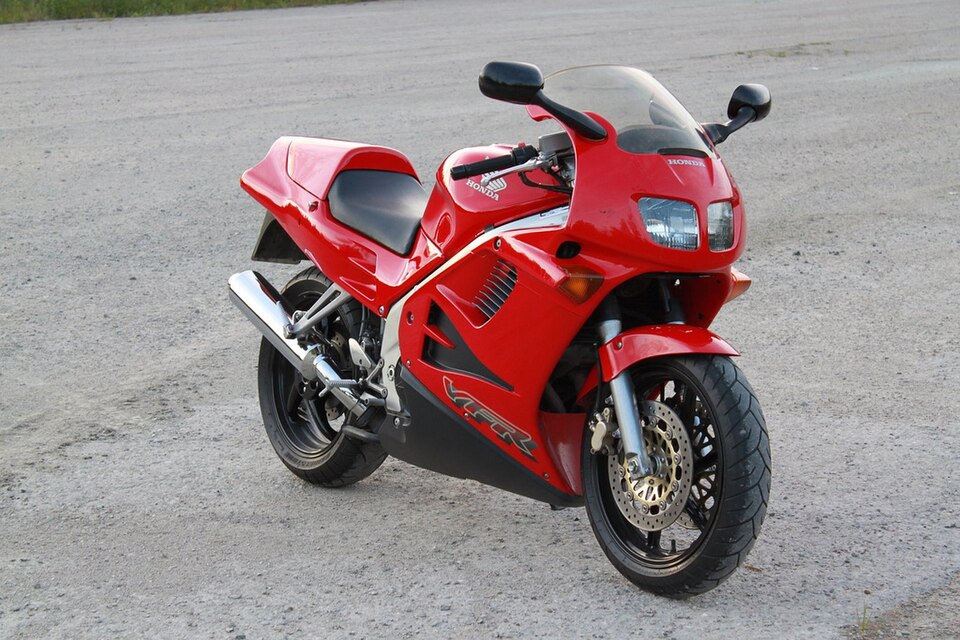
Honda Vfr750
The Honda Vfr750 has a top speed of 240 km/h (estimate; varies slightly by year and market), produces 100 hp and weighs 228 kg. Motoryk rates it 8.5/10.
The Honda VFR750F was introduced in 1986 as a successor to the VF750F, featuring a redesigned V4 engine with gear-driven cams to address earlier reliability issues. It became renowned for its exceptional balance of performance, reliability, and everyday usability, earning a strong reputation among sport-touring riders throughout its production run until 1997. The VFR750 is widely considered one of the greatest all-around motorcycles ever produced, winning numerous awards and forming the foundation for the later VFR800 series.
100 hp
Power
74 Nm
Torque
228 kg
Weight
240 km/h (estimate; varies slightly by year and market)
Top Speed
5.5–6.5 L/100km (approx. 15–18 km/L typical real-world average)
Fuel
Faired
Body
🔧 Service Schedule & Parts
Affiliate · we may earn| Service item | Every | Typical cost | Parts |
|---|---|---|---|
| 🛢️ Engine oil + oil filter | 6,000 km / 3,500 mi or 12 mo | $40-80 | 🛢️ Buy → ⚙️ Buy → |
| 🌬️ Air filter | 12,000 km / 7,500 mi | — | 🌬️ Buy → |
| ⚡ Spark plugs | 12,000 km / 7,500 mi | — | ⚡ Buy → |
| 🔧 Valve clearance check | 24,000 km / 15,000 mi | $250-500 | |
| 🔗 Chain & sprockets | 25000-40000 km (replace) | $150-300 | 🔗 Buy → |
| 🛑 Brake pads | 15000-25000 km | $30-60 | 🛑 Buy → |
| 💧 Brake fluid | 24,000 km / 15,000 mi or 2 yr | — | |
| 🧊 Coolant | 24,000 km / 15,000 mi | — | |
| 🛞 Tires | 10000-20000 km | $200-400 | 🛞 Buy → |
| 🔩 Major service | 24,000 km / 15,000 mi | $400-700 |
Video Review
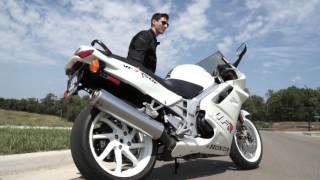
What Buyers Should Know
Gear-Driven Cam Magic
The VFR750 uses a unique gear-driven camshaft system instead of chains, producing a distinctive mechanical whine that enthusiasts love. This system is extremely durable but expensive to repair if neglected, so always verify it's been properly maintained.
Watch the Regulator/Rectifier
The most common issue on VFR750s is a failing voltage regulator/rectifier, which can fry the battery and electrical system. Always test the charging output — it should read around 14 volts at idle — before buying.
Strong Resale Value
The VFR750 holds its value exceptionally well due to its legendary reliability and cult following among sport-touring riders. A well-kept example can still command strong prices 30+ years after production, making it a smart long-term buy.
Generations & Specs by Year
Introduced 748cc V4 gear-driven cams, twin-spar aluminum frame, 16-inch front wheel.
"Honda's V4 vision arrives rough but genuinely brilliant."
That gear-driven cam whine at 4,000 rpm is either music or madness depending on your disposition — I fell hard for it the first week. The 748cc V4 pulls strongly from about 5,500 rpm and absolutely screams past 9,000, and the twin-spar alloy frame makes this thing change direction with a precision that embarrasses most contemporaries. The 16-inch front wheel was a controversial call and you feel it in slow-speed steering — there's a vagueness in tight car parks that takes some adjustment, and the suspension is underdamped from the factory, wallowing noticeably under hard braking into corners. Honda clearly hadn't finished sorting the recipe here: the fueling is abrupt off a closed throttle, heat management from that tightly-packaged engine is punishing in summer traffic, and first-year reliability gremlins with the rectifier/regulator were real enough that I'd check the charging system on any example before buying.
Pros
Cons
Revised bodywork, improved suspension, 17-inch front wheel replacing the 16-inch unit.
"The V4 that rewrote the sportbike rulebook."
That 748cc V4 pulls hard from 6,000 rpm and just keeps screaming to the redline with a mechanical howl that no inline-four can replicate — it's intoxicating and addictive in equal measure. The switch to a 17-inch front wheel was the right call; steering feels more planted and predictable than the '86-'87 bike, and you can actually lean on the front end mid-corner without that vague, floaty sensation that made earlier VFRs nervous at the limit. Weight is honest at 228 kilos — you feel it in slow car parks but it disappears the moment you're moving, and the chassis is so well-balanced it flatters average riders and rewards skilled ones. The one genuine gripe is heat: riding in summer city traffic is a leg-cooking exercise, and the gear-driven cams whine loudly enough at low speed that strangers think something's broken.
Pros
Cons
Redesigned chassis, new bodywork, revised engine internals, improved braking and ergonomics.
"The benchmark sport-tourer that rivals still chase."
I put 18,000 miles on a '91 VFR750 and the chassis revision over the Gen 2 is immediately felt — sharper turn-in, less vague at corner entry, and a stability under hard braking that genuinely builds confidence. That gear-driven cam whine at 6,000 rpm is mechanical music, and the V4 pulls cleanly from 3,500 rpm all the way to the 11,000 rpm redline without a flat spot in sight. The weight is real — 236 kg means slow-speed car park shuffles require respect, and the original-spec brake pads are mediocre for what the bike is capable of; swap them early. Ergonomics are genuinely comfortable for eight-hour days, though taller riders above 6'2" will find the bars slightly cramped over distance.
Pros
Cons
New twin-spar frame, revised gear-driven cams, dual headlights, Honda VTEC precursor fuel mapping.
"The benchmark sport-tourer that still embarrasses modern pretenders."
I put 22,000 km on a '95 VFR750 and the gear-driven cams became the soundtrack of my life — that mechanical whine building past 7,000 rpm is genuinely addictive, not a gimmick. The twin-spar frame transformed the previous generation's occasional vagueness into something with real precision; mid-corner bumps that would unsettle lesser bikes simply disappeared into the chassis. My honest gripe is the weight — 233 kg is felt in slow car parks and on tight mountain switchbacks where you're constantly wrestling it upright, and the stock suspension goes soft on long two-up loads without a pre-load adjustment you'll make constantly. But light it up on an open A-road and every one of those kilograms disappears; the V4 pulls smoothly from 4,000 rpm and then hits a second wind above 9,000 that makes you immediately forgive everything.
Pros
Cons
Used Buyer Review
"Buy the best example you can afford — compromises cost more later."
$2,500-$5,500 usedThe VFR750 is one of those bikes that rewards patience. Find a clean example and you've got something genuinely special — Honda's gear-driven cams give it that mechanical whine that sounds like nothing else on the road, and the V4 pulls cleanly from 3,000rpm right through to the redline without drama. The RC36 chassis is confidence-inspiring without being boring. It steers with real intent. Here's the honest truth though: these bikes are old now, and they weren't cheap to maintain when new. That gear-driven cam system is brilliant but labour-intensive to service. Budget for a full coolant flush, new rubber, and a carb clean minimum. Check the fairing lowers for cracks — they're expensive unobtainium now. Regulator-rectifier failures are common on higher-mileage bikes, so check charging voltage before you hand over cash. A well-sorted VFR750 at the right money is a legitimate all-rounder that'll embarrass much newer bikes on a twisty B-road. A tired one will drain your wallet slowly.
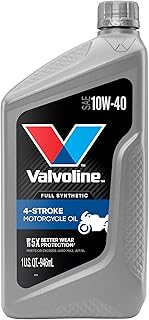
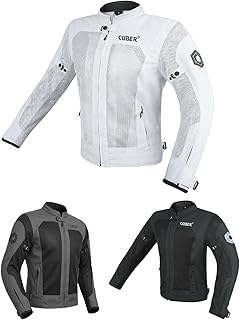
Top 10 Accessories
Curated picks for the Honda Vfr750 — owned, ridden, recommended.




Common Problems
🔥 2 CRITICALCheck voltage at idle and revs, inspect wiring
Listen for ticking or rattling at startup
Inspect weep hole under pump for residue
Check for rough idle and uneven throttle response
✅Pre-Purchase Checklist
Solid engine, electrical system is main weakness
Full Specifications
Rivals & Alternatives
Bikes that buyers cross-shop with the Honda Vfr750

Honda Vfr800
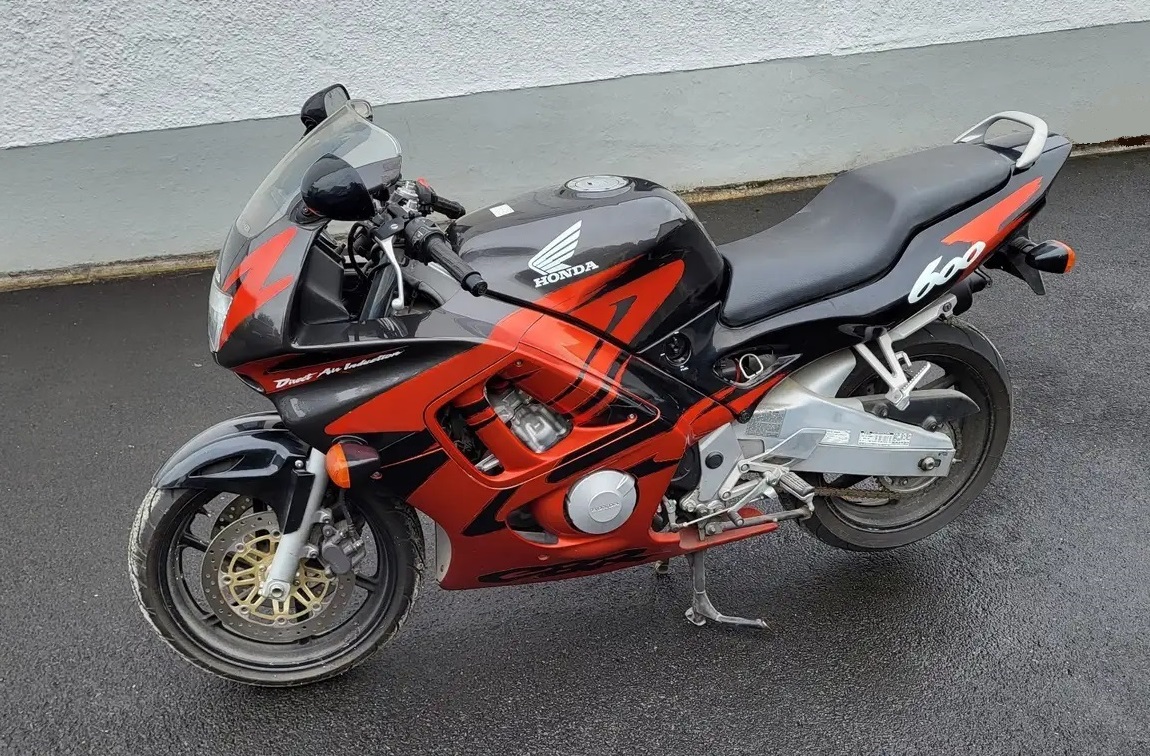
Honda Cbr600f
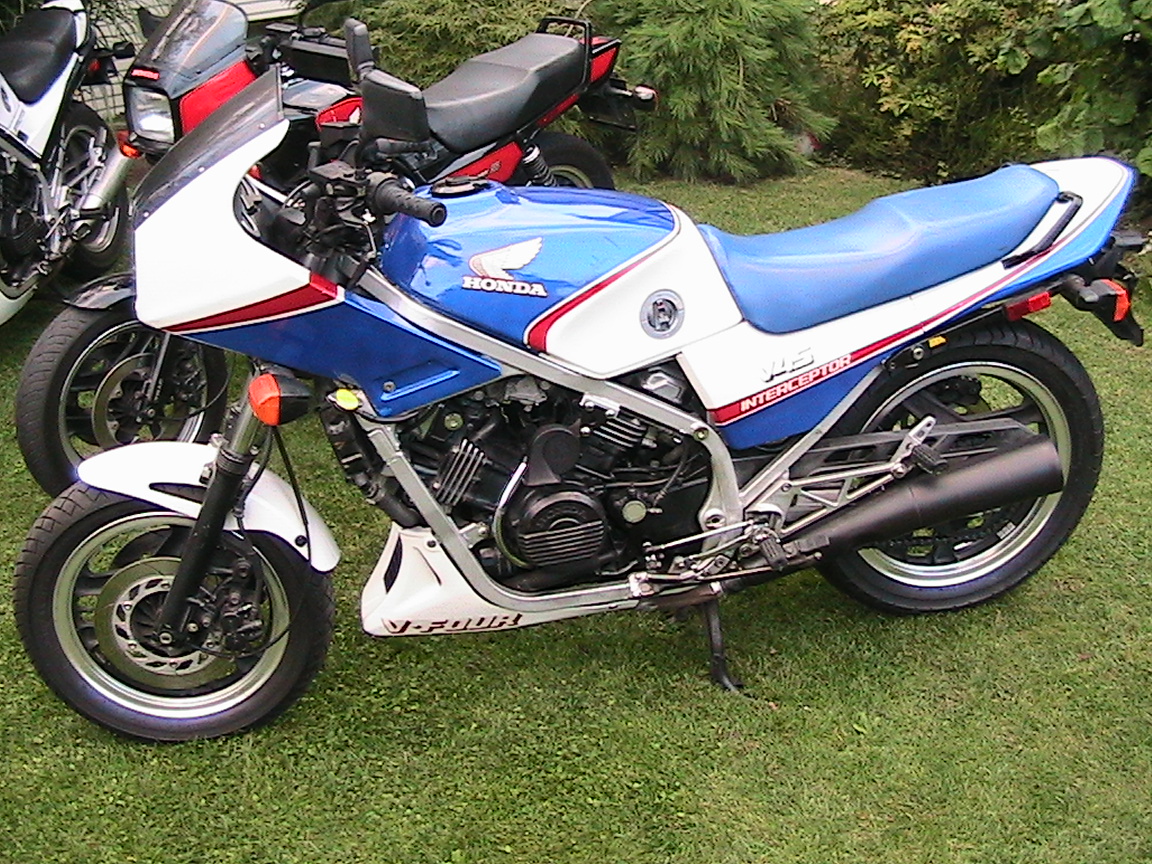
Honda Vf750 Interceptor
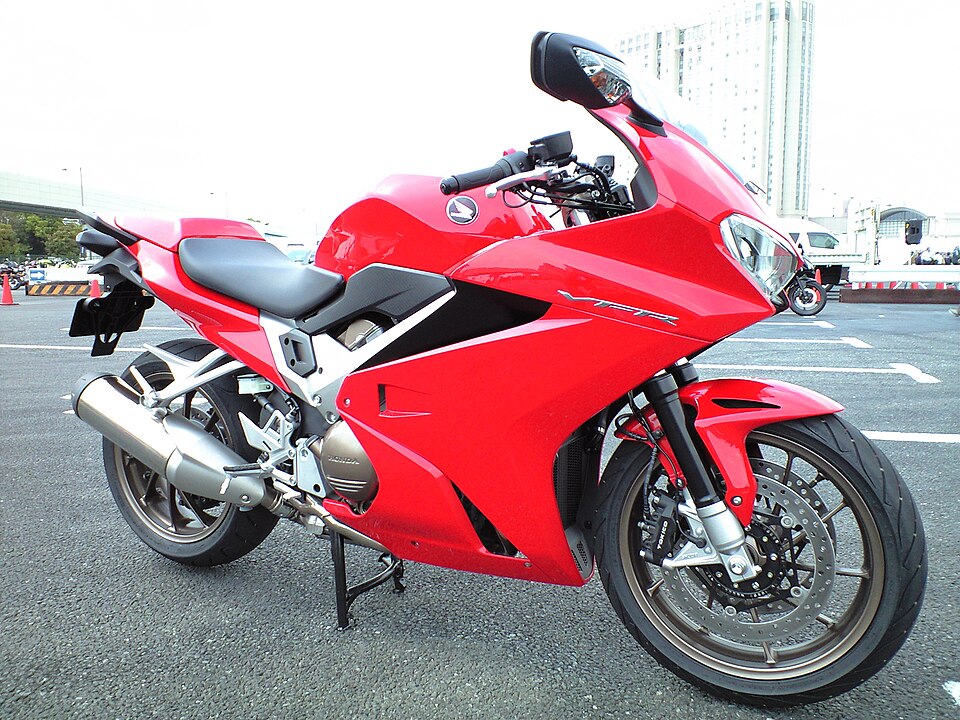
Honda Vfr800f
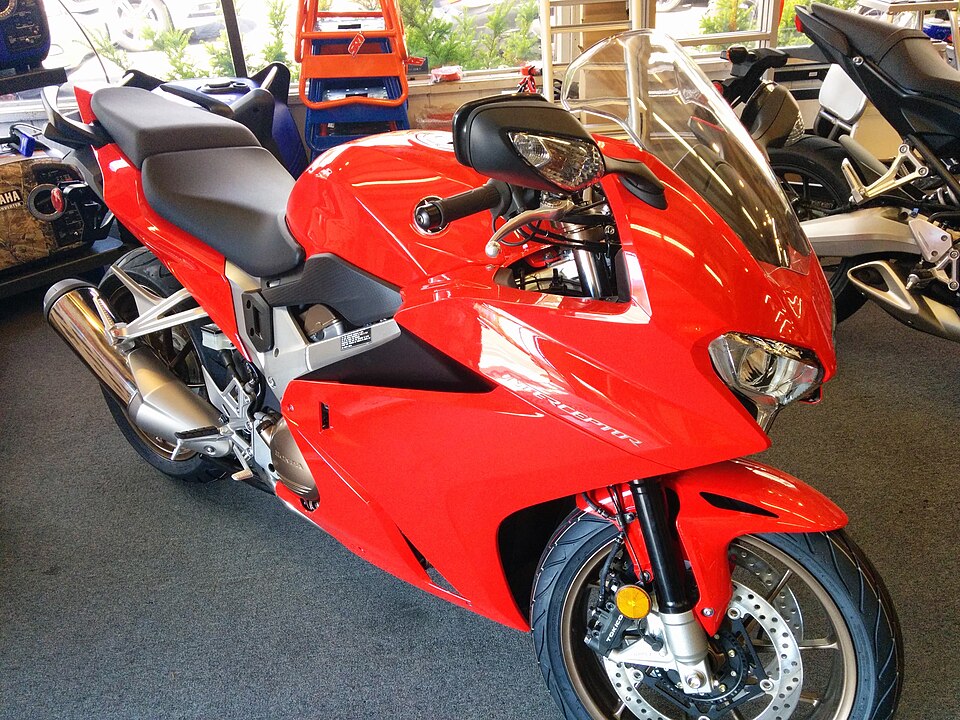
Honda Vfr800 Interceptor
Compare Honda Vfr750 Side-by-Side
compare_arrowsSpecs, power, weight & buyer verdict — head-to-head with the bikes most often cross-shopped.
Honda Vfr750 vs Honda Vfr800
Specs · Power · Buyer verdict
Honda Vfr750 vs Honda Cbr600f
Specs · Power · Buyer verdict
Honda Vfr750 vs Honda Vf750 Interceptor
Specs · Power · Buyer verdict
Honda Vfr750 vs Honda Vfr800f
Specs · Power · Buyer verdict
Honda Vfr750 vs Honda Vfr800 Interceptor
Specs · Power · Buyer verdict
More Honda Vfr750 Guides
More from Honda
View all Honda models →Community Reviews
Discussion
Frequently Asked Questions
What are common problems with the Honda Vfr750? +
Stator/charging system failure: Check voltage at idle and revs, inspect wiring (serious) | Cam gear wear and noise: Listen for ticking or rattling at startup (serious) | Coolant leaks from water pump: Inspect weep hole under pump for residue (moderate)
Is the Honda Vfr750 a good motorcycle? +
Buy the best example you can afford — compromises cost more later. Rating: 8.5/10. Best for: Experienced riders wanting analogue sportbike character daily. Avoid if: You want cheap, easy modern parts availability.
What is the horsepower of the Honda Vfr750? +
The Honda Vfr750 produces 100 hp @ 10,500 rpm (RC36, 1990–1997 model; earlier RC24 produced ~105 hp), with 74 Nm @ 8,500 rpm of torque. Top speed: 240 km/h (estimate; varies slightly by year and market).
Is the Honda Vfr750 good for beginners? +
Not really — the Honda Vfr750 is better for experienced riders. Experienced riders wanting analogue sportbike character daily Avoid if: You want cheap, easy modern parts availability
Is the Honda Vfr750 reliable? +
Owners report 2 critical issues to watch for on the Honda Vfr750, notably: Stator/charging system failure (Check voltage at idle and revs, inspect wiring). Buy with a pre-purchase inspection.
Is the Honda Vfr750 good for daily use? +
Experienced riders wanting analogue sportbike character daily Fuel: 5.5–6.5 L/100km (approx. 15–18 km/L typical real-world average).
How fast is the Honda Vfr750? +
The Honda Vfr750 reaches a top speed of 240 km/h (estimate; varies slightly by year and market), producing 100 hp at 228 kg curb weight. Real-world performance depends on rider weight, gearing, and road conditions.
What gear should I buy for a Honda Vfr750? +
Motoryk has curated a Top 10 gear list specifically for the Honda Vfr750, covering engine oil, tires, chain, battery, and brake pads — see motoryk.com/bikes/honda/vfr750/top10. Each pick is matched to this bike's spec.