Kawasaki Klx 150 vs Kawasaki Klx 230
Side-by-side comparison for used motorcycle buyers
Kawasaki Klx 150 vs Kawasaki Klx 230. Kawasaki Klx 150: 10.4 hp @ 7,500 rpm hp, 121 kg (wet/curb weight) weight, top speed 110 km/h (estimated; note: varies by road conditions and rider weight), Motoryk rating 7.5/10. Kawasaki Klx 230: 18.5 hp @ 7,500 rpm (estimated) hp, 134 kg (wet/curb weight) weight, top speed 120 km/h (estimated; note: varies by road/load conditions), Motoryk rating 7.5/10.
Performance at a Glance
Green = winner per metric · Bars are relative to the higher value
Kawasaki Klx 150
Kawasaki Klx 230
Horsepower (hp)
10.4 hp
18.5 hp
Torque (Nm)
11.2 Nm
19.1 Nm
Top Speed (km/h)
110 km/h
120 km/h
Weight (kg) — lower is better
121 kg
134 kg
Type
Dual-sport
Dual-sport
Horsepower
10.4 hp @ 7,500 rpm
18.5 hp @ 7,500 rpm (estimated)
Torque
11.2 Nm @ 6,000 rpm
19.1 Nm @ 6,500 rpm
Top Speed
110 km/h (estimated; note: varies by road conditions and rider weight)
120 km/h (estimated; note: varies by road/load conditions)
Weight
121 kg (wet/curb weight)
134 kg (wet/curb weight)
Fuel
2.5 L/100km or approximately 40 km/L (typical real-world average)
2.8 L/100km or approximately 35 km/L (typical real-world average)
Fairing
No
No
Individual Reviews
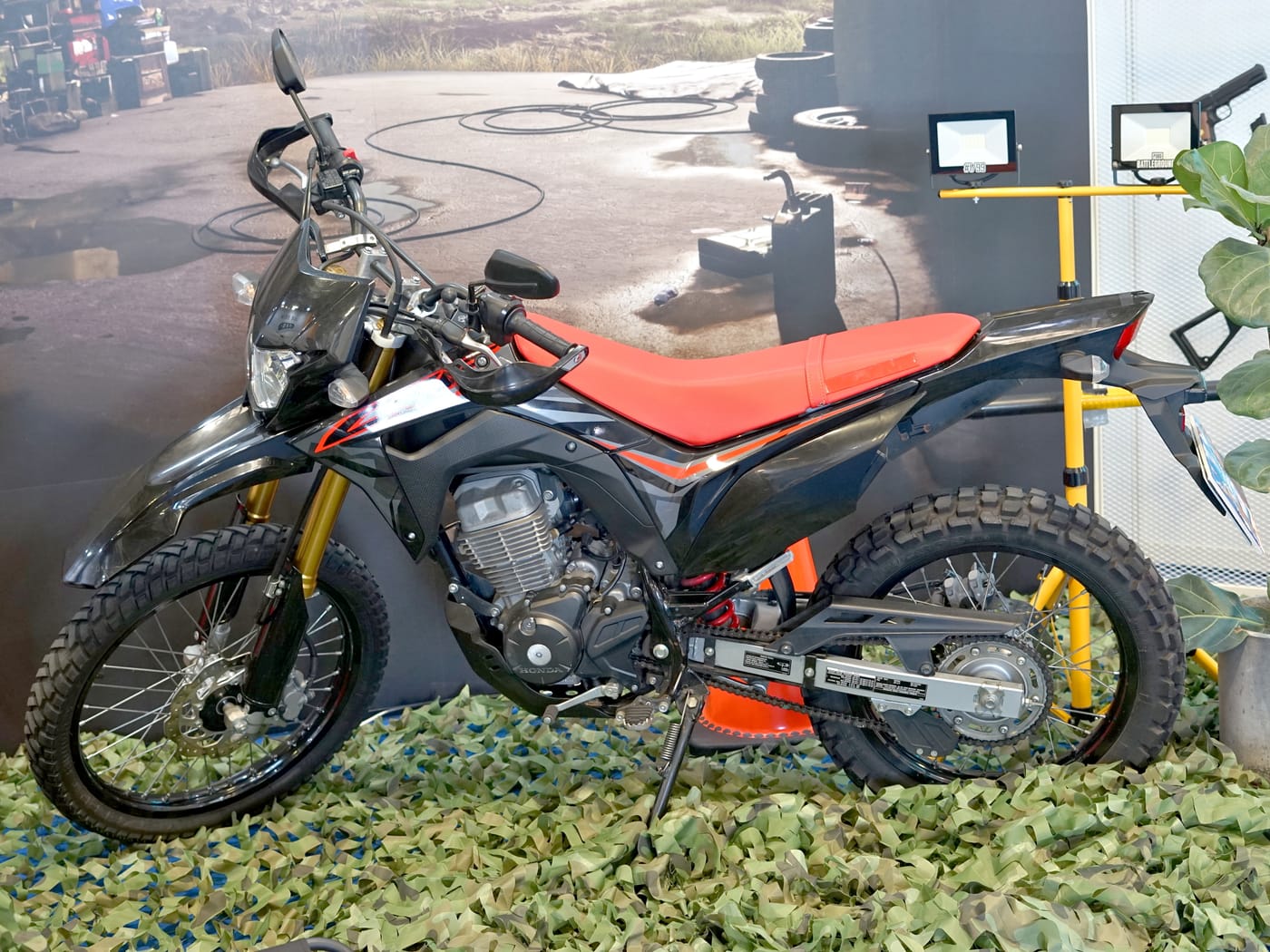
Kawasaki Klx 150
7.5/10
"Cheap, tough, and honest — perfect for dirt learners and commuters."
Pros
+Virtually unbreakable engine
+Parts cheap and accessible
+Forgiving for beginners
Cons
−Painfully slow on roads
−Basic suspension limits confidence
−Subframe cracks under abuse

Kawasaki Klx 230
7.5/10
"Honest, durable dual-sport that rewards realistic expectations over ambition."
Pros
+Bulletproof air-cooled reliability
+Low maintenance ownership costs
+Nimble in urban traffic
Cons
−Suspension too soft overall
−Cramped for taller riders
−Limited high-speed capability
Top 10 Accessories
Picks that work on either bike.