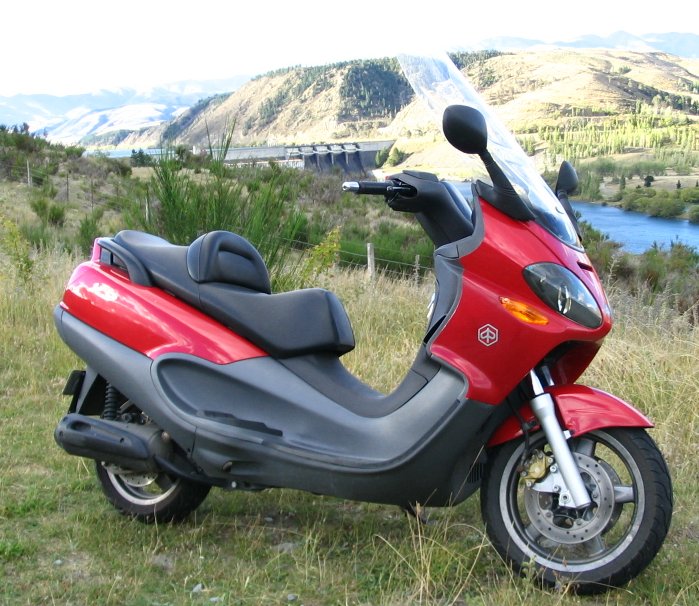
Piaggio Hexagon 250
The Piaggio Hexagon 250 has a top speed of 125 km/h, produces 20 hp and weighs 175 kg. Motoryk rates it 6.5/10.
The Piaggio Hexagon 250 was introduced in 1994 as part of Piaggio's Hexagon scooter family, which debuted in 1993 with smaller displacements. It was notable for its large-wheel, maxi-scooter design featuring a distinctive hexagonal-themed bodywork and was one of the first large-displacement scooters to offer significant touring capability. The Hexagon 250 helped define the growing maxi-scooter segment in Europe during the mid-to-late 1990s before being discontinued around 1999-2000.
20 hp
Power
20 Nm
Torque
175 kg
Weight
125 km/h
Top Speed
3.8 L/100km (approx. 26 km/L) — estimated
Fuel
Faired
Body
🔧 Service Schedule & Parts
Affiliate · we may earn| Service item | Every | Typical cost | Parts |
|---|---|---|---|
| 🛢️ Engine oil + oil filter | 6,000 km / 3,500 mi or 12 mo | $30-60 | 🛢️ Buy → ⚙️ Buy → |
| 🌬️ Air filter | 12,000 km / 7,500 mi | — | 🌬️ Buy → |
| ⚡ Spark plugs | 12,000 km / 7,500 mi | — | ⚡ Buy → |
| 🔧 Valve clearance check | 24,000 km / 15,000 mi | $150-300 | |
| 🛑 Brake pads | 15000-25000 km | $40-80 | 🛑 Buy → |
| 💧 Brake fluid | 24,000 km / 15,000 mi or 2 yr | — | |
| 🧊 Coolant | 24,000 km / 15,000 mi | — | |
| 🛞 Tires | 15000-25000 km | $150-300 | 🛞 Buy → |
| 🔩 Major service | 24,000 km / 15,000 mi | $250-500 |
Video Review
What Buyers Should Know
Rotax Engine Reliability
The Hexagon 250 uses a Rotax-sourced 2-stroke engine, known for strong performance but requiring diligent oil injection system maintenance. Neglected oil injection can lead to seized engines, so always verify this system is functioning correctly before buying.
Watch the Carburettor
Carburetor jetting issues and clogging are among the most commonly reported problems on aging Hexagon 250s, especially on bikes that have sat unused. Budget for a carb clean or rebuild as part of your purchase inspection.
Low Resale Value
The Hexagon 250 holds relatively low resale value today due to its age and the declining popularity of 2-stroke scooters in many markets. This makes it a budget-friendly buy, but parts availability is increasingly limited, which can affect long-term ownership costs.
Generations & Specs by Year
Original launch with 243cc two-stroke engine, automatic transmission, large-wheel maxi-scooter platform introduced.
"Ambitious maxi-scooter that outgrew its two-stroke heart."
The Hexagon genuinely rewrote what a scooter could be in 1994 — 16-inch wheels, real suspension travel, and a riding position that didn't punish your back on the 40-minute commute. That 244cc two-stroke pulls hard between 5,000 and 7,000 rpm, but below that band you're essentially coasting on hope, and in stop-start city traffic the power delivery feels almost deliberately awkward. At motorway speeds it sits at a stressed, buzzy 115 km/h that it can technically maintain but clearly doesn't enjoy, and the 152 kg wet weight means any low-speed manoeuvring in a car park reminds you this is not a nimble machine. What keeps it honest is the ride quality and the sense of occasion — nothing else on scooter plates in 1995 felt this grown-up.
Pros
Cons
Updated with four-stroke 250cc engine option, revised bodywork styling, improved fuel efficiency and emissions compliance.
"Practical urban hauler that age hasn't been kind to."
I ran a Gen 2 Hexagon 250 four-stroke for two years as a daily commuter and the thing genuinely surprised me — that flat floorboard and cavernous underseat storage made supermarket runs embarrassingly practical for a scooter this size. The four-stroke swap over the old two-stroke is a genuine improvement in town; smoother, quieter, less fuss at traffic lights, though you give up that snappy two-stroke punch which the old guard will mourn. Hit 80 km/h and it settles into a confidence-inspiring cruise, but push toward the claimed 120 and the bodywork starts talking back at you in ways that feel structural rather than cosmetic — this isn't a motorway machine despite what the spec sheet implies. The weak spots are predictable for late-90s Piaggio: the carb gums up if you leave it sitting, the centre of gravity feels oddly high for a maxi-scooter, and finding a dealer who stocks ignition components in 2024 is its own adventure.
Pros
Cons
Used Buyer Review
"Buy the best example you can afford, inspect everything twice."
$1,200-$3,500 usedThe Hexagon 250 is one of those scoots that punches above its class when everything's working right. That GT-style bodywork still looks purposeful, the under-seat storage swallows a full-face helmet, and the Rotax-derived engine pulls cleanly from low revs without fuss. For longer commutes or light touring duties, it genuinely earns its keep. Here's the honest bit though — these things are getting old now, and Italian electrical gremlins are real. Carb models can be finicky cold-starting until you've rejetted or cleaned the float bowl. Finding specialist knowledge at your local shop is increasingly hit-or-miss. Any used example needs a thorough inspection: check the variator rollers, rear monoshock condition, and make sure the cooling fan kicks in properly. Neglected ones become money pits fast. Buy a clean, documented example with recent belt and roller service and you've got a genuinely capable, characterful machine. Buy the cheap tatty one to save a grand and you'll spend twice that learning your lesson.
Top 10 Accessories
Curated picks for the Piaggio Hexagon 250 — owned, ridden, recommended.




Common Problems
🔥 1 CRITICALRev throttle, listen for stumbling or flat spots
Test full throttle pull, feel for jerky engagement
Inspect hoses for cracks, check coolant reservoir level
Test all lights, ignition, and instrument cluster function
✅Pre-Purchase Checklist
Decent if maintained, parts availability increasingly difficult
Full Specifications
Rivals & Alternatives
Bikes that buyers cross-shop with the Piaggio Hexagon 250
Piaggio Carnaby 200
Piaggio X8 200
Kymco Bet & Win 250
Kymco Grandvista 250
Kymco Racing 250
Compare Piaggio Hexagon 250 Side-by-Side
compare_arrowsSpecs, power, weight & buyer verdict — head-to-head with the bikes most often cross-shopped.
Piaggio Hexagon 250 vs Piaggio Carnaby 200
Specs · Power · Buyer verdict
Piaggio Hexagon 250 vs Piaggio X8 200
Specs · Power · Buyer verdict
Piaggio Hexagon 250 vs Kymco Bet & Win 250
Specs · Power · Buyer verdict
Piaggio Hexagon 250 vs Kymco Grandvista 250
Specs · Power · Buyer verdict
Piaggio Hexagon 250 vs Kymco Racing 250
Specs · Power · Buyer verdict
More Piaggio Hexagon 250 Guides
More from Piaggio
View all Piaggio models →Community Reviews
Discussion
Frequently Asked Questions
What are common problems with the Piaggio Hexagon 250? +
Carb diaphragm cracks, causing rough idle/hesitation: Rev throttle, listen for stumbling or flat spots (moderate) | CVT variator wear, sluggish acceleration: Test full throttle pull, feel for jerky engagement (moderate) | Coolant leaks from aging hoses or water pump: Inspect hoses for cracks, check coolant reservoir level (serious)
Is the Piaggio Hexagon 250 a good motorcycle? +
Buy the best example you can afford, inspect everything twice. Rating: 6.5/10. Best for: Experienced riders wanting characterful daily commuter scoot. Avoid if: You lack mechanical confidence or DIY troubleshooting skills.
What is the horsepower of the Piaggio Hexagon 250? +
The Piaggio Hexagon 250 produces 20 hp @ 8,000 rpm — estimated, with 20 Nm @ 6,500 rpm — estimated of torque. Top speed: 125 km/h.
Is the Piaggio Hexagon 250 good for beginners? +
Yes — the Piaggio Hexagon 250 is a reasonable choice for new riders (20 hp is manageable), weighing 175 kg. Experienced riders wanting characterful daily commuter scoot
Is the Piaggio Hexagon 250 reliable? +
Owners report 1 critical issue to watch for on the Piaggio Hexagon 250, notably: Coolant leaks from aging hoses or water pump (Inspect hoses for cracks, check coolant reservoir level). Buy with a pre-purchase inspection.
Is the Piaggio Hexagon 250 good for daily use? +
Experienced riders wanting characterful daily commuter scoot Fuel: 3.8 L/100km (approx. 26 km/L) — estimated.
How fast is the Piaggio Hexagon 250? +
The Piaggio Hexagon 250 reaches a top speed of 125 km/h, producing 20 hp at 175 kg curb weight. Real-world performance depends on rider weight, gearing, and road conditions.
What gear should I buy for a Piaggio Hexagon 250? +
Motoryk has curated a Top 10 gear list specifically for the Piaggio Hexagon 250, covering engine oil, tires, chain, battery, and brake pads — see motoryk.com/bikes/piaggio/hexagon-250/top10. Each pick is matched to this bike's spec.